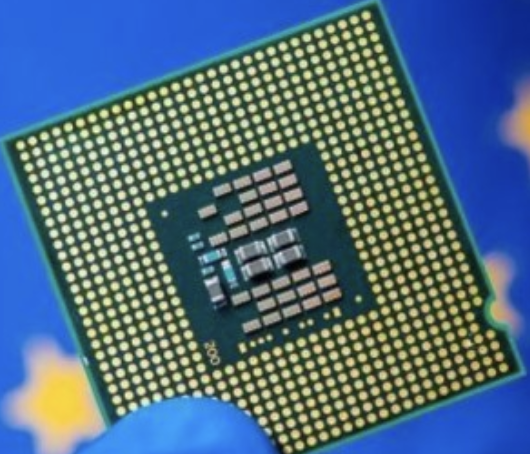
79 per cent of German companies would accept price increases of five per cent
Security of supply with chips at an extra cost: According to a new survey by the digital association BITKOM (https://www.bitkom.org), 79 per cent of German companies would be willing to do so – at least for price increases of five per cent if the semiconductors were produced in Europe. 17 per cent would even pay up to ten per cent more. Overall, 96 per cent would accept higher prices for greater independence from China.
‘Building digital sovereignty’
The industry association surveyed 503 companies with 20 or more employees in the manufacturing, IT and telecommunications sectors – industries in which semiconductors are heavily used. The survey was conducted from July to September 2025 – before the current supply bottlenecks surrounding the company Nexperia (https://www.nexperia.com/).
Although no company was prepared to pay more than ten percent extra for European semiconductors at the time of the survey, there are signs of a certain rethinking. ‘Europe and Germany must build genuine digital sovereignty, reduce dependencies and increase their scope for action,’ says BITKOM President Ralf Wintergerst.
Politics must reduce bureaucracy
According to the industry expert, in order for European semiconductors to be produced competitively, reliable framework conditions, well-trained specialists and political measures that accelerate rather than slow down investment are also needed. ‘In particular, the bureaucratic burden must be drastically reduced,’ Wintergerst concludes.
Almost three-quarters (71 per cent) of the companies surveyed rate the EU measures to strengthen the EU semiconductor industry as good in principle – and only 28 per cent as poor. The European Chips Act (https://commission.europa.eu/strategy-and-policy/priorities-2019-2024/europe-fit-digital-age/european-chips-act_en) aims to strengthen Europe’s semiconductor ecosystem in the long term. The goal is to achieve a 20 percent share of the global semiconductor market by 2030.