The criminal network is investigated for the trafficking of cultural goods; the invaluable antiquities have allegedly been looted from countries across the Balkans
On 19 November 2025, a coordinated effort led by Bulgarian authorities and supported by Europol, resulted in the dismantling of a criminal network involved in large-scale trafficking of cultural goods across Europe and beyond. This operation was conducted under the framework of a Europol operational taskforce. The action day involved law enforcement and judicial authorities from Albania, France, Germany, Greece, Italy, and the United Kingdom. The operational actions during this day were coordinated from coordination centres in Sofia, Bulgaria, and at Eurojust. Investigative activities are still ongoing.
The investigation began after a house raid conducted in 2020 in Bulgaria, where authorities seized about 7 000 cultural artifacts with inestimable historical and monetary value. These items, primarily Greco-Roman and Thracian antiquities, are of immense value due to their uniqueness and historical significance. The lack of clear provenance documentation for many of these items, established by the Bulgarian authorities at the time, raised suspicions of illegal acquisition. Since their seizure, the artifacts have been housed in the Bulgarian National History Museum in Sofia pending further investigation.
Results from the action day on 19 November 2025
- 35 arrests in Bulgaria
- 131 searches including houses, vehicles and bank safes searched (1 in Albania, 120 in Bulgaria, 3 in France, 3 in Germany, 4 in Greece)
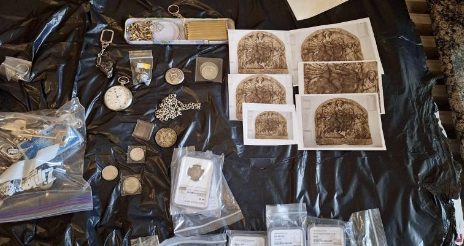
- Seizures include over 3 000 artefacts (antique golden and silver coins and other antiquities) with an estimated value of over EUR 100 million, artworks, weapons, documents, electronic equipment, over EUR 50 000 in cash, and investment gold
The primary High-Value Target (HVT) in this case is suspected of financing illegal excavations across Bulgaria and neighbouring Balkan countries. Local looters, allegedly working for middlemen acting on behalf of the HVT, are believed to have been involved in the illicit operations. The art collection seized in 2020 includes unique items, some of them dating back to 2000 BC, such as masks, military equipment, jewellery, vases, rhytons and cups from Thracian and Greco-Roman civilizations. Most of the artefacts had no provenance documentation, while only a few had questionable ones issued by auction houses and art galleries worldwide, primarily based in France, Germany, the United Kingdom, and the United States.
Europol taskforce to connect the dots across borders
Since June 2024, at the initiative of the Bulgarian authorities, Europol established an operational taskforce to facilitate information exchange, coordination, and analytical support. The work of the taskforce led to the identification of links between individuals, based in different countries as well as the location of other artefacts believed to have been trafficked by members of the network. New investigations were also initiated in some of the eight countries taking part in the taskforce. On the action day, Europol deployed two experts to Sofia, Bulgaria, to support the coordination of the activities across borders and to provide analytical support and expertise.
Balkan legacy: a breeding ground for art theft
The Balkan region and Italy, steeped in ancient history, are home to invaluable Greek and Roman archaeological treasures that have long attracted criminal networks. These criminal actors, often composed of local cells, engaged in looting, theft, and other cells, laundering stolen artifacts through the art market. The art market’s unique vulnerability to criminal activities is exacerbated by high demand from art collectors and those seeking to launder illicit funds.
Governments face challenges in combating illegal excavations due to the art market’s complexities and the difficulties in verifying the provenance of cultural and art objects. Criminal networks exploit these gaps, bypassing due diligence checks to introduce looted artifacts, including those from conflict zones like Syria and Iraq, into the market. Traffickers have developed methods to sell and launder these illegally acquired artifacts, posing a significant threat to cultural heritage preservation.
International cooperation and information exchange among national authorities are vital to detect illegally obtained antiquities, dismantle art trafficking networks, and preserve cultural heritage for future generations.