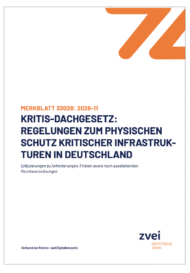
New ZVEI guidance outlines regulatory obligations, implementation deadlines and technical standards – Germany’s implementation of the European CER Directive signals a shift from conventional site protection towards integrated resilience management
Germany is fundamentally reshaping its approach to critical infrastructure protection. With the introduction of the Critical Infrastructure Umbrella Act (KRITIS-Dachgesetz), the country has established its first nationwide, cross-sector regulatory framework specifically addressing the physical resilience of critical facilities. Rather than focusing exclusively on preventing security incidents, the legislation places greater emphasis on maintaining essential services during crises and restoring operations following disruption.
The German Electro and Digital Industry Association (ZVEI) has published a comprehensive guidance document, dated 26 November 2026, examining the implications of the legislation for infrastructure operators, security consultants, manufacturers, system integrators and service providers. The publication, designated 33028:2026-11, combines regulatory analysis with technical standards and practical recommendations, providing an important reference for the security industry as Germany moves towards implementing its new resilience framework.
A new security paradigm for critical infrastructure
Europe’s changing security environment has exposed the vulnerability of essential infrastructure. Russia’s war against Ukraine, sabotage, hybrid threats and deliberate attacks on strategically important facilities have brought physical infrastructure protection increasingly into political and economic focus. Incidents affecting railway networks, airports, electricity infrastructure and data centres demonstrate the extent to which modern societies depend on the uninterrupted availability of essential services. At the same time, technological interdependencies, complex supply chains and climate-related hazards are creating additional challenges for infrastructure operators. Disruptions within one sector can have far-reaching consequences across others, turning local incidents into wider economic and societal problems. The European Union responded to these developments by adopting Directive (EU) 2022/2557 on the resilience of critical entities, commonly known as the Critical Entities Resilience Directive (CER). Adopted on 14 December 2022, the directive establishes a cross-sector, all-hazards approach encompassing deliberate attacks, technological failures and natural disasters. Germany’s Critical Infrastructure Umbrella Act transposes the CER Directive into national law. The German Federal Parliament adopted the legislation on 29 January 2026, followed by approval from the Federal Council on 6 March. The Act entered into force on 17 March 2026, with subsequent amendments in July addressing implementation deadlines.
Although the primary legislation is in place, its practical implementation remains a work in progress. Further statutory regulations are required to define critical services, infrastructure categories, qualifying thresholds and cross-sector minimum resilience requirements.
Essential services determine regulatory scope
The German legislation covers ten sectors:
- Energy
- Transport
- Finance
- Social insurance and basic income support for jobseekers
- Healthcare
- Water
- Food
- Information technology and telecommunications
- Space
- Municipal waste management
Operating within one of these sectors does not automatically bring an organisation within the scope of the legislation. The determining factor is whether an operator provides a designated critical service through a facility considered significant to its delivery. Section 5 of the Act establishes a general reference threshold of 500,000 inhabitants served by a facility. However, this figure is not intended to serve as a universal qualification criterion. Sector-specific characteristics, infrastructure categories and alternative assessment criteria will be defined through secondary legislation. Relevant considerations include the geographical extent and potential duration of service interruptions, dependencies across different sectors, the operator’s market share and the availability of alternative service providers. Germany’s Federal Ministry of the Interior has prepared a draft regulation, known as the Kritisverordnung (KritisV), to clarify these requirements. At the time of publication of the ZVEI guidance, the regulation remained under consultation. The legislation also provides mechanisms for individual facilities to be designated as critical even if they do not meet the prescribed quantitative thresholds. Under defined circumstances, both federal and regional authorities may make such determinations.
Consequently, smaller infrastructure operators should not assume that their activities will necessarily remain outside the regulatory framework.
Registration triggers statutory implementation deadlines
Once a facility has been designated as critical, its operator becomes subject to a series of legally defined obligations. Registration establishes the starting point for subsequent compliance deadlines.
| Operator obligation | Implementation deadline |
|---|---|
| Registration | Within three months of designation as critical infrastructure |
| Risk analysis and assessment | Nine months after registration |
| Implementation of resilience measures | Ten months after registration |
| Application of the resilience plan | Ten months after registration |
| Mandatory reporting of significant incidents | Ten months after registration |
| Reassessment of risks | As necessary and at least every four years |
Registration takes place through a joint mechanism established by Germany’s Federal Office of Civil Protection and Disaster Assistance (BBK) and the Federal Office for Information Security (BSI). Where an operator fails to register within the prescribed period, the BBK may initiate registration following a formal hearing. The relatively short interval between the completion of risk assessments and the implementation of resilience measures underlines the importance of early preparation. Major construction projects, security system modernisation and the integration of complex technological solutions frequently require substantial planning and procurement periods. Waiting until formal designation could therefore leave operators with insufficient time to address significant infrastructure vulnerabilities.
From conventional site protection to comprehensive resilience management
One of the most consequential aspects of the German legislation is its redefinition of physical security within the broader context of operational resilience. Traditional site protection primarily seeks to prevent unauthorised access, sabotage and damage to buildings or assets. The new framework extends this objective to include incident response, damage limitation, operational continuity and the restoration of critical services. Under Section 13 of the Act, operators must implement proportionate technical, security-related and organisational measures derived from relevant risk analyses and assessments. These measures should reflect the state of the art and the specific circumstances of the facility. Potential requirements include structural protection, electronic security systems, perimeter monitoring, access control, emergency preparedness, backup power supplies, alternative supply chains, personnel security measures, crisis management and regular exercises. The ability of security systems to function under adverse operating conditions becomes particularly important. Sophisticated detection and surveillance technologies offer limited protection if they become unavailable during a power failure, communications disruption or wider infrastructure outage. The legislation also places responsibility on executive management to establish appropriate organisational arrangements for implementing resilience measures. Physical security consequently becomes a matter of corporate governance rather than an isolated operational responsibility.
Risk assessments must extend beyond the facility itself
Facility-specific risk analysis and assessment form the basis of the statutory resilience framework. Operators must examine natural, technological and human-induced hazards alongside dependencies on external infrastructure, suppliers, contractors and other critical services. These interdependencies are particularly significant in modern infrastructure environments. A facility may remain physically undamaged yet become incapable of delivering its services because of interruptions to electricity supplies, telecommunications networks or the availability of specialist components. The ZVEI guidance therefore highlights the importance of examining the availability of operationally essential and security-related equipment, including replacement parts, during periods of disruption. The resulting resilience measures must be documented in a resilience plan that explains the underlying decisions and demonstrates their relationship to the operator’s risk assessment. Plans must be updated when circumstances require it and following each new risk assessment. Existing security concepts, risk analyses, protective measures and certifications may be incorporated where they adequately demonstrate compliance with the statutory requirements. This provision offers operators an opportunity to develop established management structures rather than introduce unnecessary parallel processes.
Physical security and cybersecurity: Separate legislation, interconnected risks
Germany’s regulatory approach distinguishes between physical and digital resilience. The Critical Infrastructure Umbrella Act addresses physical protection, while the national legislation implementing the NIS2 Directive, which entered into force on 6 December 2025, establishes the principal framework for information security and cybersecurity. Operationally, however, the distinction is becoming increasingly difficult to maintain. Industrial control systems, building management platforms, electronic access control and networked surveillance technologies create extensive dependencies between physical infrastructure and digital systems. A cyber incident can interrupt physical operations, while sabotage or unauthorised physical access can compromise information systems and communications networks. Germany has recognised these interdependencies through the establishment of a joint incident reporting mechanism operated by the BBK and BSI. Nevertheless, the two authorities retain their respective responsibilities and statutory reporting requirements. The relationship between the European CER and NIS2 frameworks illustrates a wider challenge facing infrastructure operators across Europe: regulatory compliance may be divided into separate disciplines, but effective resilience requires coordination across both. For security professionals, this reinforces the importance of shared risk assessments, coordinated monitoring, integrated incident management and clearly defined responsibilities across physical and digital security teams.
Electronic security technology: Established standards provide a foundation
A substantial part of the ZVEI guidance examines existing technical standards that can support the implementation of physical resilience measures. Rather than requiring the widespread development of entirely new security technologies, the emerging regulatory framework places greater emphasis on the appropriate selection, integration, operation and maintenance of established systems. Their effectiveness must be assessed not only under normal operating conditions but also during emergencies, technical failures and prolonged disruption.
Intrusion and hold-up alarm systems: Detection must lead to effective intervention
Intrusion and hold-up alarm systems contribute to infrastructure resilience by identifying unauthorised access and threatening situations at an early stage. Risk-appropriate system design, continuous functional monitoring, reliable power supplies and regular maintenance help preserve their protective capabilities during technical disruption or attempted interference.
Potentially relevant standards identified by ZVEI include:
- DIN VDE 0833-1 – General requirements for alarm systems
- DIN VDE 0833-3 – Requirements for intrusion and hold-up alarm systems
- DIN EN 50131 series – Intrusion and hold-up alarm systems
- DIN EN 16763 – Services for fire safety and security systems
- DIN EN 50710 – Secure remote services for fire safety and security systems
The guidance identifies Grade 3 or higher under DIN VDE 0833-3 and Grade 2 or higher under DIN EN 50131 as potentially relevant classifications. These recommendations do not, however, constitute universal statutory requirements. An effective alarm system must form part of a coordinated security process. Detection provides limited operational value unless the information generated can be translated into appropriate and timely intervention.
Electronic access control: Balancing protection and operational continuity
Electronic access control systems play an essential role in protecting sensitive infrastructure areas and restricting entry to authorised personnel. Within a resilience framework, however, access control must deliver more than reliable credential management during normal operations. Operators must also consider how systems behave during technical failures, emergencies and interruptions to supporting infrastructure. Procedures for credential revocation, emergency opening and alternative operating modes must support essential activities without unnecessarily compromising the required level of protection. Relevant technical references include DIN EN 60839-11-1, covering electronic access control systems and equipment, and DIN EN 60839-11-2, addressing planning, installation, operation, maintenance and documentation. For security consultants and system integrators, this broadens the role of access control from conventional identity and permissions management to an integral component of operational continuity planning.
Perimeter protection: Establishing an effective first line of defence
Perimeter protection provides an initial security layer intended to identify unauthorised approaches and threats before they reach essential buildings or operational assets. Its effectiveness depends on the coordinated interaction of mechanical barriers, electronic detection, lighting, video surveillance and access control. The objective is to establish sufficient time for assessment and appropriate intervention.
The ZVEI guidance identifies several potentially relevant technical references, including:
- DIN VDE V 0826-20 – Application guidelines for external perimeter security systems
- DIN CLC/TS 50661-1 – System requirements for external perimeter security systems
- DIN EN 1627 – Burglary resistance of doors, windows and related building elements
The protective capability of a perimeter security solution should therefore be assessed at system level rather than solely through the performance of individual products.
Video surveillance: Supporting situational awareness and decision-making
Video surveillance systems contribute to physical resilience through incident detection, alarm verification and situational assessment. They can provide security personnel with essential information during developing incidents and support informed decisions throughout the response process. While image quality remains important, infrastructure operators must also consider system availability, secure transmission, recording capabilities and backup power arrangements. The guidance refers to DIN EN 62676-1-1, DIN EN 62676-1-2 and DIN EN 62676-4 as relevant technical foundations for video surveillance systems. Integration with other security technologies can enhance the operational value of surveillance infrastructure. Correlating information from multiple sources supports more accurate incident assessment and provides a stronger basis for coordinated security responses.
Fire detection and alarm systems: Protecting people and essential services
Fire incidents can cause severe consequences for critical infrastructure, threatening human safety while simultaneously disrupting essential services for extended periods. Fire detection and alarm systems therefore serve a dual purpose within resilience planning: protecting occupants and limiting damage to operationally significant assets. In addition to appropriate system design, operators should consider backup power, alarm transmission, interfaces with other technical systems and procedures for alternative operation and recovery.
Potentially relevant standards include:
- DIN VDE 0833-1 – General requirements for alarm systems
- DIN VDE 0833-2 – Requirements for fire alarm systems
- DIN VDE 0833-4 – Voice alarm systems for fire emergencies
- DIN 14675-1 – Design and operation of fire alarm systems
- DIN 14675-2 – Requirements for specialist contractors
- DIN EN 54 series – Product and system requirements for fire detection and alarm systems
Existing building regulations and facility-specific fire protection requirements remain applicable. The resilience framework complements these obligations by requiring operators to consider the potential consequences of fire-related disruption for the delivery of critical services.
Climate change broadens the infrastructure risk landscape
Although sabotage and hybrid threats dominate much of the contemporary infrastructure protection debate, the European all-hazards approach also requires systematic consideration of natural hazards and climate-related risks. Flooding, heavy rainfall, storms, extreme temperatures and lightning can significantly affect buildings, electrical installations and security systems. For infrastructure designed to remain operational over several decades, changing environmental conditions must increasingly inform both initial system design and subsequent modernisation programmes. The ZVEI guidance places particular emphasis on lightning and surge protection. Relevant standards include the DIN EN IEC 62305 series for lightning protection, DIN EN IEC 61643 for surge protection devices, and DIN VDE 0100-443 and DIN VDE 0100-534. Protective measures must be considered throughout the operational life of a facility. Equipment degradation, changing environmental conditions and evolving risk assessments may require existing solutions to be reviewed or adapted. The implications extend beyond Germany. Climate-related infrastructure risks vary considerably across Europe, the Middle East and Africa, reinforcing the importance of site-specific assessments rather than reliance on uniform security specifications.
Technical standards support compliance but do not replace risk assessment
An important distinction in the ZVEI publication concerns the legal status of the identified standards. The Critical Infrastructure Umbrella Act does not automatically make every referenced technical standard mandatory. Nor does it replace existing construction, licensing, occupational safety or sector-specific requirements. The applicability of particular standards depends on the characteristics of the facility, the critical services it provides, the results of its risk assessment and existing regulatory obligations. Technical standards offer valuable guidance on the state of the art and support the development of appropriate, professionally designed security solutions. Nevertheless, compliance cannot be demonstrated simply by applying a generic catalogue of technical specifications. Operators must be able to explain why their chosen measures are suitable and proportionate in relation to the identified risks. This distinction is particularly relevant for international security technology manufacturers. While many of the standards cited by ZVEI are German implementations of European or international standards, their regulatory application must be assessed within the relevant national framework.
Industry-specific resilience standards will shape implementation
The German legislation establishes general protection objectives but does not yet comprehensively define cross-sector minimum resilience requirements. Section 14 provides for secondary legislation to specify these requirements. At the time of publication of the ZVEI guidance, the relevant provisions remained under development. Infrastructure operators and industry associations may also propose sector-specific resilience standards. These are intended to translate general statutory obligations into practical requirements reflecting the operational characteristics of individual industries. Existing sector-specific information security standards can provide a methodological and organisational foundation. However, they must be extended to address physical hazards, relevant protection objectives and appropriate resilience measures. The BBK is responsible for assessing the suitability of proposed standards in agreement with the BSI and with the involvement of the relevant federal or regional authorities. For the security industry, this creates an opportunity to contribute technical expertise and operational experience to the development of practical and proportionate resilience frameworks. It also highlights the potential importance of cooperation between infrastructure operators, technology manufacturers, security consultants and industry associations.
Infrastructure operators should begin preparations now
The absence of finalised secondary legislation should not prevent infrastructure operators from evaluating their existing security arrangements.
ZVEI recommends a structured preparation process comprising five principal stages:
- Determine regulatory exposure: Identify essential services, relevant facilities and the potential applicability of statutory thresholds.
- Evaluate existing protection measures: Document electronic, mechanical, structural, organisational and personnel-related security arrangements.
- Assess hazards and dependencies: Examine site-specific risks, natural hazards, external service providers, supply chains and potential operational disruptions.
- Develop and prioritise resilience measures: Establish appropriate protection objectives, assign responsibilities and prepare resilience plans.
- Implement, monitor and review: Introduce the necessary measures, establish reporting procedures, conduct training and exercises, and regularly evaluate effectiveness.
The guidance stresses that this approach is illustrative rather than a universally applicable compliance checklist. Infrastructure operators must adapt it to their specific risks, organisational structures and sector-related requirements. Particular attention should be paid to the availability of essential components and replacement equipment. Dependence on individual suppliers or specialist maintenance providers can become a significant vulnerability during periods of disruption. Reliable maintenance arrangements, procurement strategies and replacement-part availability should consequently form part of comprehensive resilience planning.
Implications for the European and international security industry
Germany’s Critical Infrastructure Umbrella Act has implications extending beyond domestic infrastructure operators. As EU member states implement the CER Directive through their respective national legislation, security manufacturers and service providers must increasingly address requirements that extend beyond conventional product performance. System availability, interoperability, redundancy, lifecycle management, documentation and demonstrable protective effectiveness are becoming increasingly relevant considerations in infrastructure security projects. For international suppliers serving European markets, the ability to understand national regulatory requirements while working within established European and international technical standards will be particularly valuable. System integrators may also face growing demand for solutions that combine electronic security, mechanical protection, building automation, cybersecurity and professional security services. This development does not diminish the importance of individual security technologies. Rather, it places their performance within a broader assessment of how effectively an organisation can maintain essential operations during adverse circumstances. Germany’s regulatory framework may also expand further. According to ZVEI, the German government intends to review the legislation within two years of its entry into force. The review will include consideration of whether the general threshold of 500,000 inhabitants served should be lowered. Such a change could bring additional infrastructure operators within the scope of the legislation, extending the potential market for resilience-related security technologies and services.
Conclusion: Service continuity becomes the measure of effective security
Germany’s Critical Infrastructure Umbrella Act represents a significant shift in the understanding of physical infrastructure protection. Protecting buildings, facilities and equipment remains indispensable, but these activities increasingly serve a wider objective: safeguarding the availability of services on which economies and societies depend. For infrastructure operators, this means aligning security investment more closely with operational continuity, risk exposure and recovery capabilities. For the security industry, it reinforces the importance of integrated solutions, professional planning and long-term technical support. The new ZVEI guidance provides a valuable bridge between statutory protection objectives and established security engineering practice. Although important regulatory details remain outstanding, operators already have sufficient technical and methodological foundations to begin strengthening their resilience. For the wider EMEA security community, Germany’s approach illustrates a regulatory development worth monitoring. While legal obligations differ between jurisdictions, the underlying challenges of infrastructure interdependence, hybrid threats, climate-related disruption and operational continuity extend well beyond national borders. Ultimately, the resilience of critical infrastructure will not be measured by the number of security systems installed, but by their collective ability to protect essential services when normal operating conditions can no longer be guaranteed.
Source: ZVEI – German Electro and Digital Industry Association, Guidance Document 33028:2026-11, KRITIS-Dachgesetz: Regulations for the Physical Protection of Critical Infrastructure in Germany, 26 November 2026.