
In Germany, mobile video surveillance has evolved from a niche product into an integral part of modern security concepts. Around 21,000 mobile surveillance systems are currently in use across the country – on construction sites, in energy projects, at industrial facilities and in local authority buildings. This trend shows that mobile security has long since become part of everyday life.
Companies that regularly deploy temporary security solutions now know exactly what technology they need – and how quickly it must be available. This is precisely where GuardUp comes in: as a digital marketplace that, for the first time, transparently brings together offers, prices, availability and logistics.
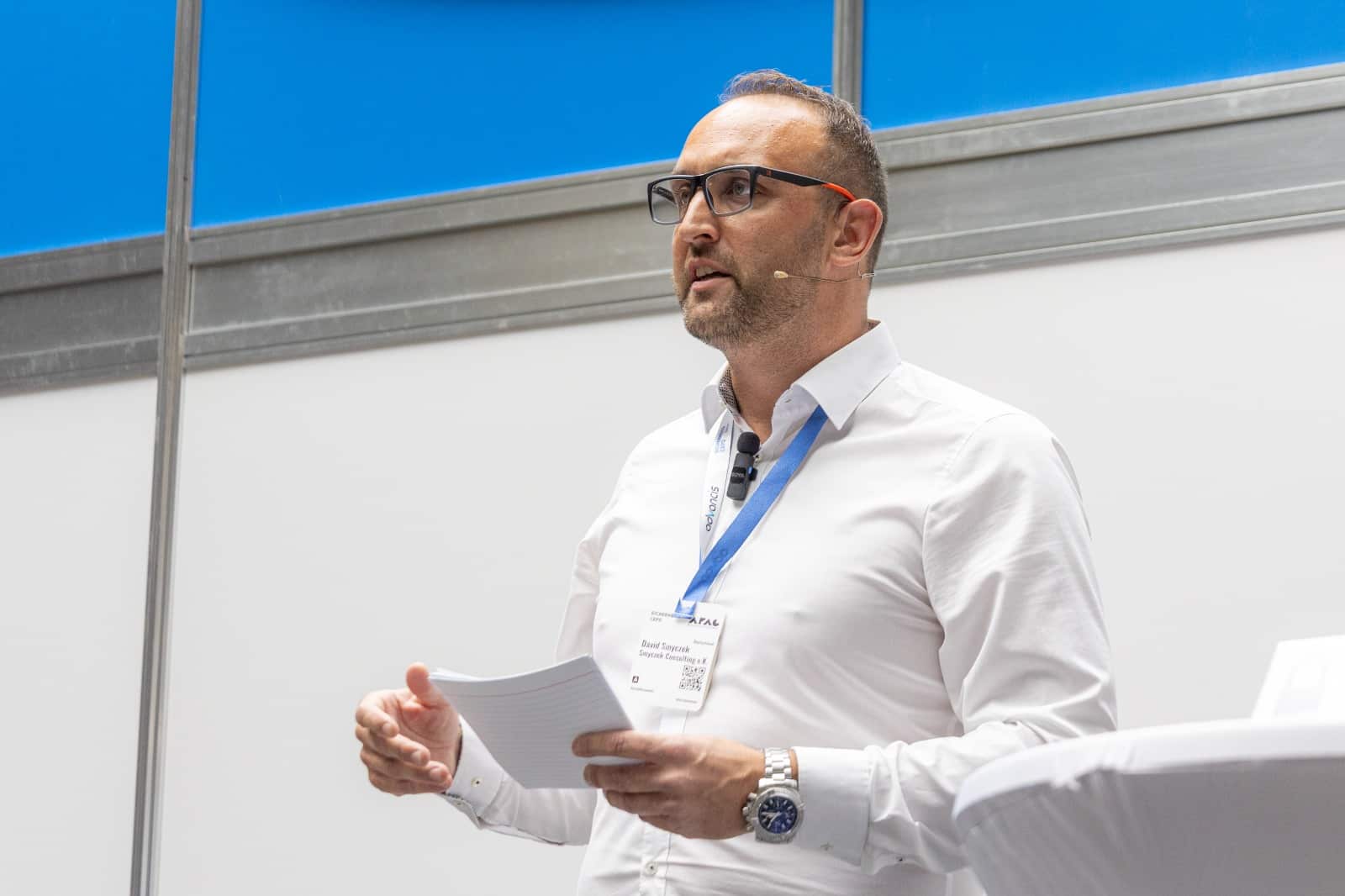
Behind GuardUp is a young technology company from Germany that specialises in the digitalisation of security-related services. The platform was founded by David Smyczek, who is also the managing director. The company’s aim is to digitally map a market that has hitherto been heavily analogue in nature and to significantly simplify procurement processes. GuardUp is entirely web-based and accessible via the platform www.guardup.de. Users – such as construction firms, energy suppliers, industrial companies or local authorities – can research, compare and directly enquire about or book security solutions there.
“Security must be orderable in five minutes – not five hours,” says Smyczek, describing the approach behind the platform.
A market experiencing strong growth
The market for mobile video surveillance is growing steadily. Analysts predict that the number of systems will rise to between 30,000 and 34,000 by the end of the decade.
The main drivers of this trend are rising material costs, more complex construction projects and an increasing number of targeted thefts. Theft of diesel, copper, tools or specialised components occurs regularly, particularly on construction sites.
The consequences are often significant: in addition to the direct loss of materials, costs arise from construction delays, downtime or complicated liability issues. In power line construction in particular, damages can quickly reach six-figure sums.
Many providers, little clarity
Despite this growth, the market remains highly fragmented. More than 80 providers compete with differing pricing models, technical standards and contract structures.
For clients, this often means: numerous phone calls, unclear quotes and a time-consuming comparison phase. Local authorities and larger companies in particular, which need to obtain multiple quotes, quickly reach their organisational limits here.
GuardUp aims to simplify this process. The platform collects quotes, creates comparison matrices and structures technical information. Regulatory requirements – such as NIS2 or KRITIS-relevant standards – can also be taken into account during the selection process. Providers wishing to be listed on the platform must meet the relevant technical and organisational requirements.
From comparison portal to industry standard
GuardUp sees itself not merely as a brokerage platform, but as a digital process standard for mobile security.
Users can compare products directly, view prices and contract terms transparently, and check availability. Logistics costs are calculated automatically, whilst all relevant order data is documented in a structured manner.
The ordering process is deliberately kept streamlined: a complete system can be enquired about or booked within a few minutes. This speed can be crucial, particularly for construction projects or short-term security measures.
Technology drives the next stage of development
At the same time, technology is also advancing rapidly. Modern systems combine artificial intelligence, sensor technology and autonomous functions to make security more efficient.
AI helps to reduce false alarms and relieve the burden on control centres. In addition, new sensor solutions are being deployed – such as radar, drone detection or ground pressure sensors.
Self-sufficient systems are also becoming increasingly important; these operate independently of the power grid and can therefore be deployed even in remote areas. In the future, robotic systems could even play a role, for example in automated site inspections.
New regulations raise requirements
With the European NIS2 Directive, the number of organisations subject to specific security requirements is rising significantly. According to estimates, around 30,000 organisations will fall under these regulations in future.
This also means growing demands on documentation, transparency and technical standards – areas that digital platforms such as GuardUp are set to support more strongly in future.
Outlook: Security as a platform
In the long term, GuardUp aims to go beyond the traditional security control centre. The goal is to become a one-stop shop for temporary security solutions.
New functions are planned, which the company is currently working on. These include, among other things, a feature that will allow users to request security solutions not yet listed directly in the system. The request is then automatically forwarded to potential providers, who can then offer their product or even complete security services.
In this way, the platform is gradually evolving into an open infrastructure that digitally brings together supply and demand in the security market.
Conclusion
The mobile security sector is growing – and with it the need for more efficient processes. Platform solutions such as GuardUp are bringing structure to a market that has previously been highly fragmented.
Through standardisation, transparency and speed, a new benchmark for quality is emerging in the procurement of temporary security solutions.
Or, as David Smyczek puts it: “We don’t just see ourselves as a marketplace. We are building the digital infrastructure for a new security sector.”

