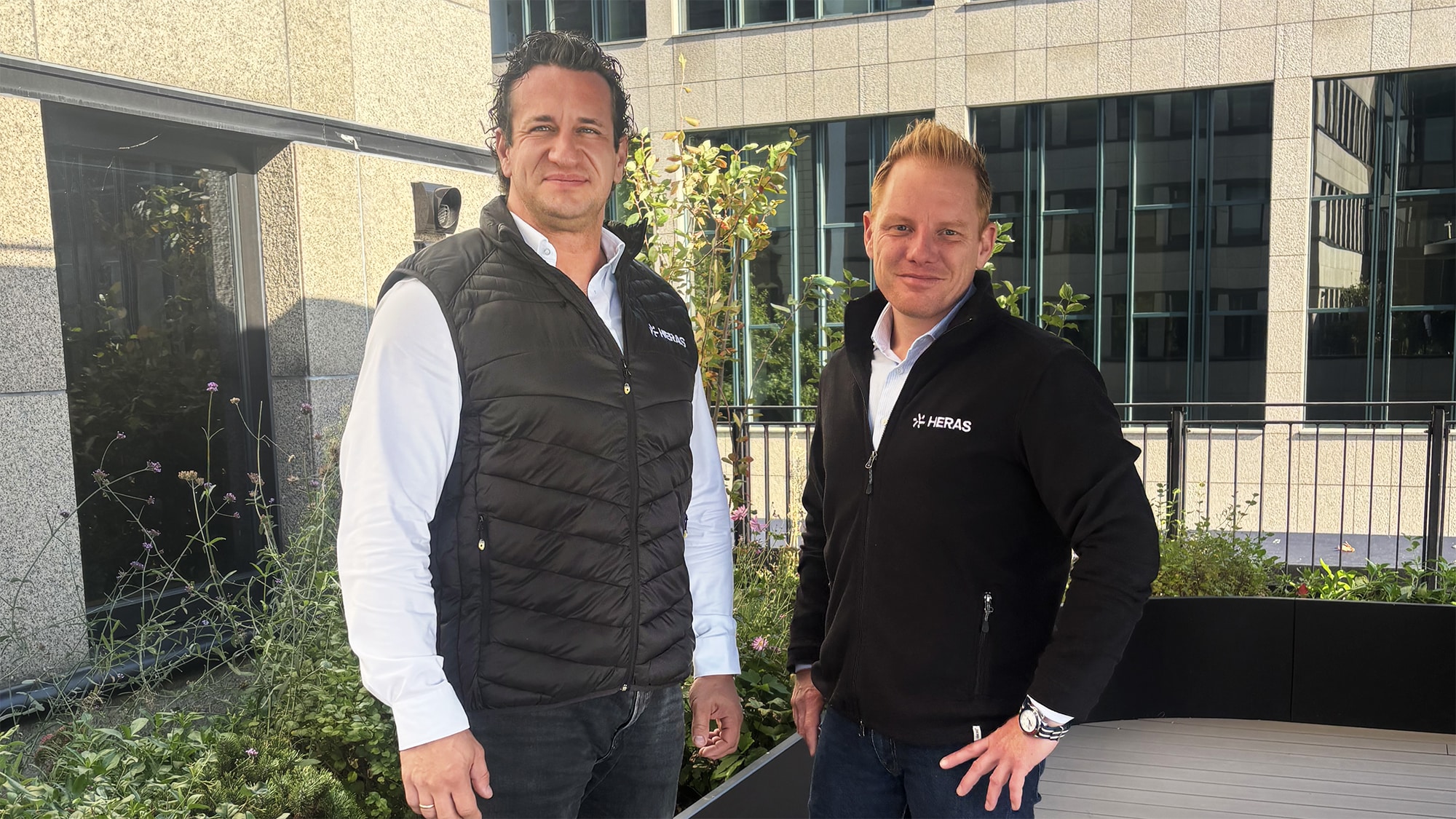
European security provider Heras has completed the rebranding of eight established security technology companies in Germany, Austria and Switzerland. Effective 2 November 2026, the businesses operate under a unified Heras brand, bringing together expertise in physical protection, electronic security and IT-based security systems. The move marks a further stage in the group’s European integration strategy, reflecting growing demand for comprehensive security solutions that combine local expertise with cross-border capabilities.
Heras has completed the latest phase of its European brand integration, bringing eight established security technology businesses in the DACH region under a single corporate identity. The companies involved are HERAS Deutschland GmbH, Freihoff Sicherheitsservice GmbH, Gleich GmbH, Schmid Alarm GmbH, vi2vi Retail Solution GmbH, vi2vi GMS AG, PROTEGO 24 GmbH and GBTS Plan GmbH.
The transition, effective 2 November 2026, concludes a gradual rebranding process during which several businesses initially retained their established names alongside the designation “Part of Heras”. The unified brand is intended to strengthen market recognition, facilitate cooperation across technical disciplines and provide a more consistent point of contact for customers managing increasingly complex security requirements.
The integration also reflects a broader development within Europe’s security industry: the convergence of traditional physical protection, electronic security technologies and digitally connected security management platforms. As organisations seek to reduce fragmentation between individual systems and service providers, the ability to deliver coordinated solutions across multiple facilities and national markets is becoming an increasingly important competitive factor.
European Integration Strategy Reaches a New Milestone
The DACH rebranding forms part of a wider transformation initiated in October 2025, when the former Garda Group announced its adoption of the Heras name. The strategy was designed to consolidate established regional security businesses under a common European identity while retaining the technical expertise and customer relationships developed by individual companies.
In February 2026, businesses in the DACH region that did not already carry the Heras name began using the transitional “Part of Heras” designation. The completion of this phase in November establishes a unified public identity, although the group emphasises that existing regional structures and local customer relationships will remain in place.
“With our shared Heras brand and the completion of the rebranding, we are making visible what has already been a reality: well-established security specialists working hand in hand and combining their expertise under a common identity across the DACH region and Europe,” said Sebastiaan Krol, Chief Executive Officer of Heras DACH.
From a market perspective, the integration represents more than a change in corporate identity. It creates a framework through which specialised companies can coordinate technical expertise, project delivery and customer support under a common organisational approach. However, the announcement concerns brand integration rather than a newly disclosed legal merger of all participating companies.
Connecting Physical, Electronic and Digital Security
The enlarged Heras portfolio brings together several disciplines that have traditionally been delivered by separate security providers. These include perimeter protection and mechanical barriers, intrusion and fire detection systems, access control, video surveillance and integrated security management technologies.
The group’s strategy focuses on combining these capabilities into coordinated solutions covering the planning, installation, maintenance and ongoing operation of security infrastructure. This approach is particularly relevant for industrial facilities, extensive commercial properties and critical infrastructure environments, where individual security systems increasingly need to function as components of a wider operational architecture.
The convergence of these technologies also introduces additional technical and organisational challenges. Access control, surveillance and alarm systems frequently rely on network connectivity, software platforms and remote maintenance capabilities. Their integration can improve situational awareness and operational efficiency, but it also requires careful consideration of interoperability, cybersecurity, system availability and responsibility for maintenance and incident response.
Consequently, the value of an integrated security offering depends not simply on the range of available technologies but on the ability to coordinate them effectively throughout their operational lifecycle.
Cross-Border Capabilities and Local Market Expertise
Heras operates across ten European countries and, according to the company’s latest announcement, employs more than 3,200 people. The DACH organisation is administratively headquartered in Langenfeld, near Leverkusen, Germany.
The group’s European structure is intended to support customers requiring consistent security standards across several locations while preserving access to regional technical expertise and established service relationships. For internationally operating businesses, this combination may offer advantages in project coordination, system standardisation and the management of security infrastructure across national borders.
At the same time, the continued importance of local operations highlights a central challenge for large security groups. Security installations are shaped by national regulations, technical requirements, infrastructure characteristics and customer-specific operational conditions. A unified brand does not eliminate these differences, making the preservation of local expertise a significant element of the integration strategy.
The group’s ability to balance European scale with regional responsiveness will therefore be an important factor in translating the new corporate identity into tangible operational benefits.
Consolidation Reflects Changing Security Market Requirements
The Heras rebranding illustrates how European security providers are adapting their structures to a market increasingly defined by interconnected technologies and multidimensional threats. Physical security, electronic monitoring and digital infrastructure protection are becoming more closely linked, while customers increasingly expect providers to manage complex combinations of technologies rather than isolated installations.
This development is particularly relevant for operators of critical infrastructure and geographically distributed facilities. Consistent security architectures, coordinated maintenance arrangements and clearly defined responsibilities can contribute to operational resilience, particularly when installations involve multiple sites, technologies and service partners.
For the wider European security sector, the Heras integration offers an example of how established specialist businesses can be brought together under a common brand without abandoning their regional presence. Whether this model delivers its intended advantages will ultimately depend on the operational integration of expertise, technical systems and service processes.
The significance of the transition therefore extends beyond corporate branding. It reflects a wider shift towards security providers capable of combining physical protection, electronic systems and digital security management within coordinated, cross-border service structures. As these disciplines continue to converge, the ability to deliver technically interoperable and operationally reliable solutions is likely to become an increasingly important measure of competitiveness in the European security market.