- Security service providers are developing offerings that range from individual services to integrated models
- The complexity of threats and scarce human resources are driving the further development of service models
- Technological innovations support the implementation of integrated security concepts
Hybrid threats, new regulatory requirements and scarce human resources are increasing the pressure on companies, public authorities and KRITIS operators to realign their security architecture. Clients are increasingly turning to integrated security concepts. In these, security service providers take responsibility for an overall model and bring together personnel, technology and processes to form a holistic security architecture.
These are key findings from the latest Lünendonk study, ‘Security Services in Germany,’ which is available for free download at www.luenendonk.de.
More technology, more responsibility, more integration
Geopolitical tensions and advancing digitalisation are increasing the pressure on authorities and companies to act. More and more clients are pooling security responsibilities and involving security service providers in strategic and operational decisions.
Technological developments are accelerating the transformation. Digital access controls, networked control centres, mobile deployment and documentation systems, and intelligent video analysis are changing planning, service delivery and verification. Security service providers are increasingly integrating these technologies into their concepts and combining operational services with technical support and digital control.
The Lünendonk Study 2025 shows that the concept of integrated security services is well established in the market: 70 per cent of study participants say they offer such services. At the same time, understanding of the term and concept remains inconsistent. Many providers understand integrated security services to mean primarily the combination of classic security services with security technology. Holistic models also include consulting as well as coordination, control and quality responsibility.
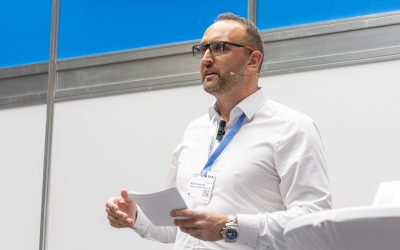
‘Integrated security services focus on cooperation rather than individual services. They require coordinated processes and a partnership-based understanding of roles between the client and the service provider,’ comments Stefan Schubert, consultant at Lünendonk & Hossenfelder. ‘Clients and providers must jointly analyse security requirements, prioritise risks and derive an overall concept that consistently combines operational performance, technology and quality assurance.’
Reference
The Lünendonk study 2025 ‘Security Services in Germany’ included 50 providers. In 2024, these accounted for 44 per cent of the market volume for security services (excluding cash and valuables logistics). The study thus offers a comprehensive overview of the structure of the German market for security services. It contains numerous long-term evaluations, detailed analyses and interpretations of the market structure as well as current topics and trends. The Lünendonk study is available for free download at www.luenendonk.de.