Museums face an increasingly complex security challenge: protecting valuable collections against theft, vandalism and cyber attacks while remaining accessible public spaces. At MUTEC 2026 in Leipzig, developments in 3D LiDAR, digital access management and integrated security systems highlighted how the protection of cultural heritage is evolving. Across Europe, the central question is no longer simply how to secure individual objects, but how to safeguard collections, digital infrastructure and essential museum operations without compromising public access.
A visitor moves too close to a valuable artwork, ransomware renders a collection database inaccessible, or a failure of the digital ticketing system disrupts admission. These scenarios involve very different threats, yet their consequences can affect the same fundamental responsibility: a museum’s ability to protect its collections while continuing to fulfil its public mission. Museum security can therefore no longer be understood solely in terms of intrusion detection, CCTV and the physical protection of exhibition spaces. It increasingly encompasses the technological and organisational infrastructure on which cultural institutions depend.
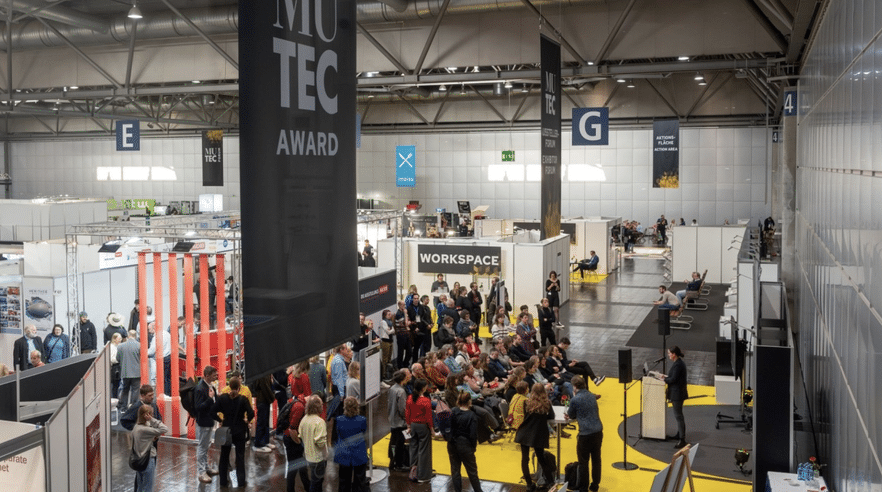
This broader understanding was reflected at MUTEC, the international trade fair for museum and exhibition technology, held in Leipzig, Germany, on 5–6 November 2026. Together with the parallel denkmal trade fair for conservation, restoration and heritage preservation, the event provided a platform for examining the protection and long-term management of cultural assets. According to the organiser, the two exhibitions collectively attracted 14,100 visitors from 49 countries and 529 exhibitors from 34 countries. For the international security industry, the most relevant developments were those connecting traditional object protection with cyber security, digital visitor management, preventive conservation and operational preparedness. Yet a fundamental tension remains. Museums must maintain high levels of protection while preserving the openness that defines their cultural and educational purpose. Physical barriers can interfere with the visitor experience, additional checks may create congestion, and complex technology increases operating costs. Effective security therefore depends less on the visibility of protective measures than on their ability to address clearly defined risks without unnecessarily restricting access.
From object protection to organisational preparedness
A central element of the MUTEC programme was the four-part discussion series organised by the German Museums Association under the theme Preparing Together: Rethinking Museum Security. Its subjects included vandalism prevention, emergency planning, cooperation with response organisations and the development of effective crisis-management teams. The programme reflected a growing recognition that museum security is not simply a matter of installing increasingly sophisticated equipment. Technology must form part of a wider operational framework that determines how risks are identified, how incidents are assessed and how staff respond. Vandalism prevention illustrates this challenge particularly clearly. Valuable works are often displayed in areas where proximity to the original is an essential element of the visitor experience. Completely separating visitors from exhibits would undermine the purpose of many exhibitions. Security systems must therefore provide appropriate detection without creating excessive physical barriers or generating unmanageable numbers of alarms.
Torsten Cech, Head of Technology and Security at the Museum of Fine Arts Leipzig, addressed preventive measures against vandalism as part of the event programme. The subject extends beyond the immediate protection of individual works. An effective security plan must account for the value and vulnerability of objects, expected visitor movements, environmental conditions and the procedures triggered by different types of incidents. The role of personnel is equally important. An alarm is of limited value if it cannot be assessed quickly or if museum attendants lack clear instructions on how to respond. Technical detection, staff training and communication with a central security function must therefore operate as a coordinated process. The same principle applies to fire, water ingress and other emergencies. Sensors can detect changes in environmental conditions and initiate alerts, but they cannot determine which collection items should be prioritised for protection, whether an area can be entered safely or when evacuation is required.
Those decisions depend on established responsibilities, documented emergency procedures and realistic exercises involving museum staff and, where appropriate, firefighters, police and specialist conservation teams. Across Europe, the issue is particularly acute for smaller institutions operating with limited budgets and personnel. Not every museum can justify a permanently staffed control room or a dedicated crisis-management department. Proportionate protective measures, cooperation with external specialists and clear prioritisation of the most significant risks are consequently essential. Security technology can support these arrangements, but it cannot substitute for an organisation capable of making informed decisions under pressure.
Cyber security: When cultural infrastructure becomes an attack surface
Digital transformation has significantly expanded the operational dependencies of museums, galleries, archives and heritage institutions. Collection databases, digital inventories, loan documentation, insurance information, ticketing platforms and administrative systems have become integral to daily operations. At the same time, video surveillance, electronic access control and alarm management increasingly rely on IP networks and connections to other digital platforms. ICOM Germany addressed this convergence through a panel discussion entitled Museum Security in the Age of Cybercrime. Chaired by Professor Stefan Simon of the Rathgen Research Laboratory of the Staatliche Museen zu Berlin, who also serves as president of ICOM’s international museum security committee, the session brought together expertise from museum administration, information security, digital transformation and law enforcement. Participants included René Allonge of the Berlin State Criminal Police Office, Torsten Cech, Silvio Herbert of the Badisches Landesmuseum and representatives of the museum technology sector.
The subject has direct implications for security professionals. A ransomware incident may do more than interrupt administrative services. If digital inventories, object-location records or conservation documentation become unavailable, essential collection-management activities can be affected. The compromise of information relating to high-value loans, insurance arrangements or security procedures may create further risks. Connected physical security systems introduce additional exposure. Network cameras, access control servers and intrusion detection platforms commonly have their own user accounts, remote maintenance interfaces and integration points. Weak administrative credentials, unsupported firmware or insufficient separation between security and office networks can allow an incident affecting one environment to spread into another. This makes secure system architecture increasingly important.
Security networks should be segmented according to their operational sensitivity. Administrative access requires appropriate authentication, while remote maintenance should be controlled, documented and restricted to authorised personnel. Regular patching, vulnerability management and reliable backups are essential, but so is the ability to restore systems after an attack. An effective recovery plan must identify which systems require priority attention and how essential operations can continue while digital services are unavailable. For example, a public-facing information screen and the database containing the location and condition of valuable objects may both be digital assets, but their operational importance is very different. Treating them as equivalent in a recovery strategy would be a mistake.
European institutions must also consider the applicable regulatory environment. Personal data processing is subject to the General Data Protection Regulation where it applies, while national cyber security requirements may differ according to an institution’s legal status and activities. The EU’s NIS2 framework does not automatically classify every museum as a regulated critical entity; its application must be assessed against the relevant sectoral definitions and national implementation. The broader lesson is clear: museums may not necessarily be designated critical infrastructure, but their technical dependencies can resemble those found in other complex organisations. Physical and digital security can no longer be planned in isolation.
3D LiDAR: Discreet protection without physical barriers
One of the more technically distinctive security applications presented in the MUTEC programme came from German sensor manufacturer Blickfeld, which highlighted the use of three-dimensional LiDAR for protecting museum exhibits. LiDAR, or Light Detection and Ranging, uses laser-based distance measurements to produce a three-dimensional representation of the surrounding environment. Rather than relying primarily on conventional video imagery, it enables systems to identify spatial positions and movement within defined areas. For museums, this offers a potentially useful alternative to visible barriers or certain conventional motion-detection arrangements. Software-defined protection zones can be established around individual exhibits or groups of objects. When movement enters a restricted area, the system can generate an alert. With its QbProtect S approach, Blickfeld describes a configuration in which multiple exhibits may be monitored by a single sensor, with detection zones adjusted through software as exhibition layouts change.
The potential advantages are particularly relevant in historic interiors and galleries where additional physical barriers, extensive cabling or intrusive alterations would be undesirable. During opening hours, spatial monitoring can support proximity detection around individual exhibits. Outside public access periods, the same general technology may contribute to intrusion detection across monitored areas. Software-configurable zones may also reduce the effort required when an exhibition is rearranged. A new display configuration does not necessarily require the physical relocation of every detection device. Nevertheless, three-dimensional sensing should not be treated as inherently free from false alarms or other operational limitations. Occlusion caused by visitors, display furniture or architectural features can affect the area visible to a sensor. Installation height, detection range, reflective surfaces and the geometry of the protected object must all be considered. High visitor density can further complicate the distinction between permitted movement and genuine intrusion into a protected zone.
Claims regarding false-alarm reduction therefore require validation under realistic operating conditions, rather than acceptance solely on the basis of a demonstration. Commissioning tests should reflect anticipated visitor behaviour and exhibition arrangements, including crowded periods and changes in object positioning. For a museum, an unacceptable false-alarm rate can undermine operational confidence and place additional demands on attendants. Integration with existing security systems is equally important. An intrusion into a defined LiDAR protection zone must generate an appropriate event within the alarm infrastructure. Operators need to establish alert priorities, response procedures and the system’s behaviour during power or network interruptions. Event logging and the ability to review incidents should also form part of the assessment.
Data protection represents another consideration. Processing spatial point-cloud information rather than conventional video may reduce the collection of directly identifiable visual imagery. However, the privacy implications depend on the information retained, the system’s capabilities and whether individuals can be identified or tracked through the processed data. LiDAR consequently adds another option to the museum security toolkit. Whether it is preferable to CCTV analytics, photoelectric barriers or other detection technologies depends on the specific protection objective and the physical environment.
Digital ticketing becomes a security-critical process
Visitor management is another area in which digital services are becoming increasingly important to museum operations. Online reservations, timed-entry tickets, digital wallets and centralised customer accounts can simplify administration and improve the visitor experience. At the same time, they introduce dependencies involving cyber security, access control and service availability. At MUTEC, SECUTIX highlighted its S-360 platform, which integrates ticket sales, access management and data analysis. Complementary services support mobile ticketing, digital wallets and connections to other operational platforms. Its S-PROTECT offering is designed, according to the company, to help identify or limit automated and fraudulent activity within digital ticketing processes.
The risks differ from those traditionally associated with physical access control. Automated programs may attempt to acquire large ticket allocations, exploit user accounts or interfere with booking and payment processes. Other threats include API abuse, fraudulent transactions and the unauthorised reuse of digital tickets. Relevant technical countermeasures may include bot detection, authentication controls, monitoring of unusual transaction patterns and mechanisms designed to maintain service availability during exceptionally high demand. Virtual queuing can help manage peak traffic, although its effectiveness depends on platform capacity and the implementation of the wider booking infrastructure. For museums, however, preventing malicious activity is only part of the challenge.
The connection between ticketing software and physical admission systems must also remain dependable. Timed-entry reservations can improve visitor distribution, while electronic validation can support controlled access to temporary exhibitions or capacity-restricted events. If a cloud service or internet connection fails, the museum must still be able to manage admission safely. Appropriate offline functionality, locally available authorisation data or documented manual procedures may therefore be necessary, depending on the institution’s operational requirements. German provider Giant Monkey also presented its go~mus visitor-management software, used by cultural institutions across several European markets. The availability of integrated platforms reflects a wider change in which visitor services, administration and building operations increasingly share digital infrastructure.
This convergence requires clear boundaries between convenience and security. A ticketing platform can contribute to access management, but it cannot replace a complete building security strategy. Admission controls must be coordinated with emergency evacuation arrangements, and escape routes must not depend on the continued operation of an online ticketing service. The handling of personal information also requires careful attention. Not every operational analysis needs identifiable visitor data. Where personal information is processed, access rights, retention periods and processing purposes must be appropriately defined. Digital ticketing is therefore becoming a component of the broader security architecture. Its value should be assessed not only through faster transactions and reduced queues, but also through operational reliability, data protection and the ability to recover from disruption.
Preventive conservation broadens the meaning of security
The protection of cultural heritage extends beyond preventing criminal activity or unauthorised access. Environmental conditions, storage arrangements and the monitoring of sensitive collection areas can be equally important to the long-term preservation of objects. At MUTEC, solutions for preventive conservation included modular storage cabinets with integrated humidity control. Such systems are intended to reduce damaging fluctuations in relative humidity around sensitive collections. Their effectiveness depends on the integrity of the enclosure, the performance of the environmental controls and the conservation requirements of the objects being protected. A stable environmental setting is not necessarily the same as an appropriate one. Different materials may require different humidity conditions, and the suitability of a storage system should be determined in consultation with conservation specialists.
The relevance to security technology lies in the early detection of harmful changes. Environmental sensors can identify deviations from specified conditions and generate alerts before damage becomes extensive. However, accurate measurement must be accompanied by suitable thresholds, reliable communications and defined procedures for responding to an alarm. A museum storage facility may therefore require an integrated approach combining intrusion detection, access control, fire protection, environmental monitoring and emergency planning. Historic buildings add further complexity, as conservation requirements and restrictions on altering the structure can limit the installation of conventional equipment.
An international perspective was provided through the Polish PANOPTIKUM initiative, featured in the programme by Dr Paulina Florjanowicz of the National Institute for Museums in Poland. The project illustrates approaches involving shared infrastructure for storage, conservation and digitisation, including the potential to provide additional protection for collections at risk. Such arrangements have growing relevance in a European environment affected by armed conflict, climate-related hazards and increasing dependence on digital collection records. The war against Ukraine has highlighted the exposure of cultural heritage to threats that extend far beyond conventional theft or vandalism. In extreme circumstances, collection protection may involve emergency relocation, temporary storage, coordination between institutions and the preservation of digital documentation outside the affected site. These requirements cannot be met through security equipment alone. They depend on long-term cooperation, appropriate facilities and planning that extends beyond the boundaries of an individual museum.
A specialised market for integrated protection
For manufacturers, consultants and systems integrators, the technologies presented at MUTEC illustrate a market with demanding technical and organisational characteristics. Museums require reliable security but cannot always adapt their buildings or exhibition arrangements to standardised solutions. Historic structures may restrict physical alterations. Temporary exhibitions require flexible monitoring. Different objects present distinct environmental and security needs. Digital systems must remain protected and maintainable, while staffing and investment budgets are often constrained. This places considerable importance on careful design and interoperability.
An advanced exhibit-protection system has limited value if its alerts cannot be incorporated into existing procedures. A digital ticketing platform must remain manageable during technical failures. Collection databases require not just preventive cyber security controls but also credible recovery arrangements. Procurement should therefore begin with clearly defined protection objectives rather than individual product features. Which risks present the greatest potential harm to a collection? Which events require automatic detection? What response times are necessary? How will performance be verified under normal visitor conditions? And what are the costs of operating and maintaining the system throughout its expected life? The answers should shape equipment selection, system architecture and service agreements.
Equally important is cooperation between museum management, conservators, security professionals, facilities teams and IT specialists. Each discipline understands a different part of the institution’s operating environment. Excluding any of them from early planning can result in incompatible systems, unnecessary expenditure or operational restrictions that are difficult to correct later. For international suppliers, success in this market depends on understanding the specific requirements of cultural institutions rather than treating museums as ordinary commercial buildings. The ability to integrate technology discreetly, maintain it over time and demonstrate a measurable contribution to collection protection is likely to be more valuable than an extensive catalogue of functions that operators cannot effectively use.
Security should enable openness, not undermine it
MUTEC 2026 illustrated how far the concept of museum security has developed. The prevention of theft and vandalism remains essential. But cultural institutions must also consider ransomware, the availability of digital visitor services, environmental threats and their ability to respond to emergencies that affect collections or operations. Modern technology can contribute to these objectives. Three-dimensional sensing offers new methods of spatial detection, digital access platforms can help manage visitor flows, and connected systems can improve the availability of operational information. None of these benefits should be taken for granted. Their value depends on reliable implementation, appropriate integration, ongoing maintenance and the ability of staff to interpret information and respond effectively.
For European museums, there is also a wider institutional responsibility. Cultural heritage is preserved not merely to keep it secure, but to make it accessible to present and future generations. Protective measures must therefore be assessed against both their security benefits and their impact on the public experience. The goal is not to monitor every visitor as extensively as possible. It is to combine physical protection, cyber security, conservation and operational preparedness in ways that allow cultural institutions to remain functional and accessible, including when individual systems or services are disrupted.
The most secure museum is not necessarily the one with the greatest number of barriers. It is the one that can protect its collections, respond to disruption and remain open to the public.