
New solutions to an old security vulnerability in modern bank buildings
The spectacular break-in at the vault of a Sparkasse branch in Gelsenkirchen-Buer has been reported on extensively. There is no need to recount the case again. From a security perspective, however, it is worth taking this a step further. After all, the crucial question is no longer whether perpetrators can use walls, ceilings or floors as a point of entry. It is: why are these areas still not monitored with the same rigour as doors and windows in many security concepts – and which technologies can close this gap?
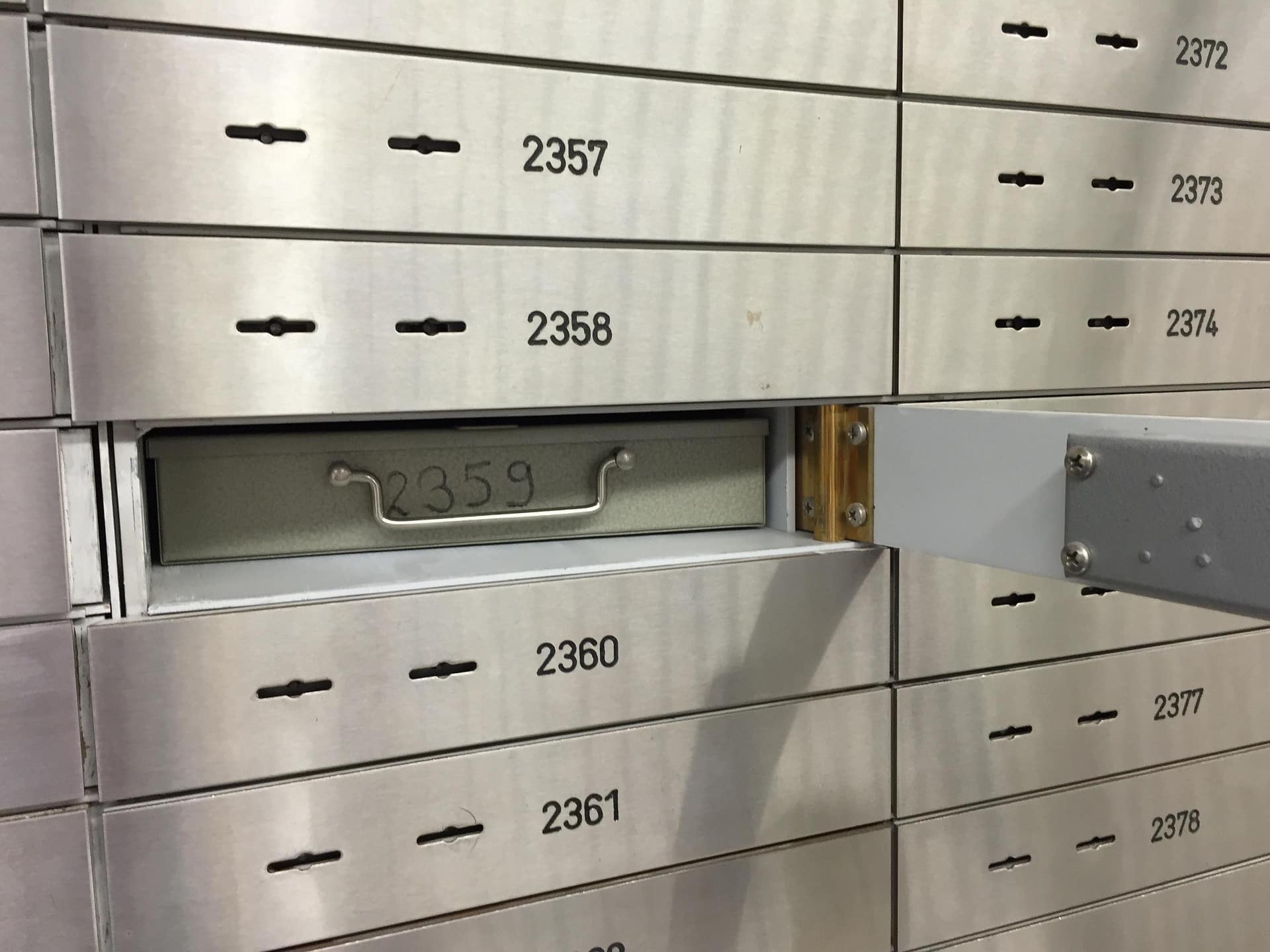
The break-in in Gelsenkirchen-Buer at the end of December 2025 has brought an attack pattern to the public’s attention that is well known to security experts. Perpetrators gained access to the savings bank building via an adjacent multi-storey car park and drilled a hole into the vault. More than 3,000 safe deposit boxes were broken into. According to the police, it was a fire alarm that finally led to a search of the building and the discovery of the break-in in the early hours of 29 December.
It is not possible to make a reliable assessment, based on publicly available information, of exactly what security technology was in place in the building and why the breach was not detected earlier. The case should therefore not be used retrospectively as evidence of the failure of a particular technology.
However, it illustrates the fundamental problem very clearly: a highly secure room does not have just one door.
The perpetrator does not follow the layout of the security concept
Professional burglary protection concepts traditionally pay close attention to conventional points of entry. Doors are monitored and mechanically reinforced, windows are secured, and interior spaces are monitored with motion detectors or other alarms. However, an attacker does not base their approach on where the architect has designated an entry point.
They look for the route where mechanical resistance, the time required and the risk of detection align in the most favourable way for them.
Consequently, walls, ceilings and, under certain structural conditions, even floors become potential points of attack. This can be particularly relevant for vaults and other high-security areas if they adjoin underground car parks, cellars, plant rooms, archives, neighbouring areas or other comparatively little-used spaces.
At first glance, a solid wall conveys a sense of security. And, of course, its mechanical resistance remains a key component of protection. However, resistance and detection are two distinct functions. A structural element can hinder an attack over a prolonged period without necessarily detecting that work is currently being carried out on it.
It is precisely at this point that the technological question arises – one which, following high-profile cases such as the one in Gelsenkirchen, is more important than yet another reconstruction of the events: how can the building envelope itself be integrated into electronic surveillance?
When a wall becomes a sensor
According to Schmeissner, there is currently growing demand from the banking and building society sector for solutions to monitor large areas of solid wall and building structures. At the end of August 2026, the company therefore once again turned its attention to its capacitive intrusion detection system.
The technical principle differs fundamentally from the point-based monitoring of a conventional access point. A multi-layered sensor assembly consisting of conductive fleece and insulating interlayers is applied to the surface to be secured. Three layers of conductive fleece form the sensor structure. The middle layer acts as a measuring electrode, whilst the two outer layers serve as shielding.
This creates a defined electric field within the sensor area. If the structure is altered or damaged by drilling, chiselling or forced penetration, the monitored field also changes. This deviation can be detected electronically and transmitted as an alarm.
The difference compared to a point-based detector is significant: it is not merely a selected area that is monitored. The surface itself becomes the sensor.
Once installed, the sensor assembly can be painted over, making it largely invisible. For banks, government offices or other buildings used for representative purposes, this is not merely an aesthetic consideration. Security technology can thus be integrated into the building fabric without visibly altering the character of a room.
Up to 50 square metres with a single detector
In the Schmeissner solution, the Cx-1 capacitive field-change detector handles the electronic evaluation. It features a measuring circuit; pre-alarm and main alarm thresholds can be configured. For intrusion detection or area monitoring, the manufacturer specifies a potential sensor area of up to 50 square metres per detector. Larger areas can be covered using a modular setup.
For applications with high security requirements, VdS accreditation is particularly relevant. VdS Schadenverhütung lists the Cx-1 under accreditation number G110086 as a Class C field-change detector. The certificate refers, amongst other things, to the VdS 2482 guideline for capacitive field-change detectors. The current certificate is valid until 26 July 2026.
The detector can also be integrated into various approved intrusion detection systems. VdS lists solutions from Telenot, Siemens and Bosch, amongst others, as compatible systems. This means that area monitoring is not a stand-alone specialist product; rather, it can become an integral part of a higher-level intrusion detection architecture.
Existing buildings present a particular challenge
From a security perspective, the possibility of retrofitting is particularly interesting. This is because the real challenge does not lie exclusively in new bank buildings or newly constructed high-security areas.
Many security-critical facilities are located in buildings whose structural frameworks are, in some cases, decades old. Access control, video surveillance, intrusion detection systems and control centre technology have been modernised or supplemented over time. The fundamental spatial structure of a building, on the other hand, changes much less frequently. This can result in security concepts that are technically advanced at traditional access points, whilst other potential points of entry are based on assumptions made when the building was constructed.
This is precisely where comprehensive monitoring can prove valuable. According to the manufacturer, Schmeissner’s capacitive intrusion detection system can be integrated into both new and existing buildings. The system can be installed directly on the surface to be monitored and adapted to pillars, beams, recesses or other structural features.
This makes retrofitting a realistic option if a current risk analysis shows that a room requiring special protection is accessible via parts of the building where tampering would not previously have been detected immediately.
No call to monitor every wall
However, cases such as that in Gelsenkirchen do not imply that banks should now equip every wall across the board with electronic sensors. That would be neither economically nor, from a security perspective, strictly necessary.
What is crucial, rather, is a property-specific risk analysis: What assets are being protected? Which rooms adjoin the security area? What structural barriers are in place? Where could perpetrators operate undisturbed? What means of attack are realistic? How long would a breach take – and would the attack be detected before the mechanical barrier is overcome? This shifts the focus from individual products to the protective envelope of a room.
In the case of a vault, this protective envelope consists of more than just a vault door. It encompasses walls, floors and ceilings, as well as ventilation and service openings, technical penetrations, adjoining rooms and all passageways to less secure areas of the building. The crucial question is therefore not merely: How difficult is it to breach this room? Equally important is: How early can we detect that someone has started to do so?
Technology alone does not guarantee security
However, even the best sensor technology cannot solve this problem on its own. An effective security concept only emerges from the interplay of mechanical resistance, electronic detection, alarm transmission, video surveillance and access control, as well as clearly defined organisational responses.
An alarm only has security value if it is reliably transmitted, correctly assessed and followed by an appropriate response. Conversely, even a substantial structural barrier can lose its protective effect if an intruder is given enough time to work on it unobserved.
For planning and installation, this means that intrusion detection must not be considered in isolation. Schmeissner therefore states that, in addition to the actual components, it also offers support with project-specific design, technical consultancy, commissioning and training. The company cites data centres, cash-in-transit facilities, government agencies with specific confidentiality requirements, prisons, jewellers and military installations as further areas of application.
The security vulnerability is well known – which makes it a planning issue
The break-in in Gelsenkirchen has attracted enormous public attention. Further reporting on drills, the perpetrators’ routes and broken-into lockers alone therefore does little to advance security technology.
What is more interesting is what follows from this: the fact that professional criminals can target building structures is not a new realisation. This is precisely why it is remarkable that, in some security concepts, wall, floor and ceiling surfaces are still not considered as potential points of entry with the same rigour as doors and windows.
The technological response to this does not necessarily have to be the same everywhere. Capacitive intrusion detection is one way of supplementing mechanical resistance with an electronic detection layer. Its real value lies in detecting an attack, if possible, whilst it is still being prepared or carried out – rather than only once the barrier has been breached.
In this way, the technology points to a more fundamental shift in the security of particularly vulnerable premises: From protecting defined access points to protecting the entire relevant building envelope.
For banks and building societies, but also for data centres, vaults and other high-security areas, this is likely to be the key lesson to be learnt from recent incidents. The question is no longer whether an intruder can get through a wall.
The question is whether the security concept will detect them before they get through. [ML]

