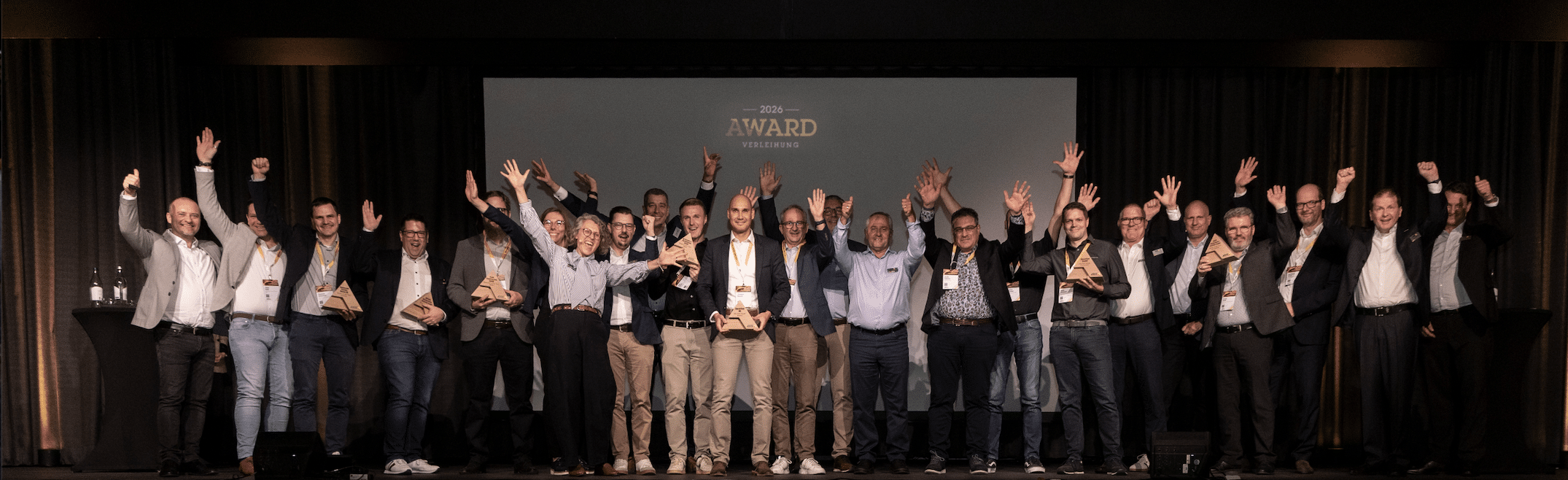
Artificial intelligence is transforming the security industry far beyond its traditional remit. At the Axis Partner Day in Nuremberg, some 120 industry representatives from Germany, Austria and Switzerland discussed emerging technologies, economic opportunities and the responsibilities associated with increasingly intelligent security systems. The presentation of the Axis Partner Awards 2026 marked another highlight of the event.
The security industry is undergoing a profound transformation. Network cameras are evolving into intelligent sensors, artificial intelligence is unlocking previously underutilised data, and cloud platforms are reshaping the architecture of security infrastructures. Yet as technological capabilities expand, so too do the requirements for cybersecurity, data sovereignty and the responsible use of automated decision-making processes. Against this backdrop, Swedish network video specialist Axis Communications held its annual Partner Day on 12 November 2026. Under the motto “Growing Together. Securing Success”, the company brought together approximately 120 partners and industry experts from Germany, Austria and Switzerland at the Scandic Nürnberg Central and LOFTWERK venues in Nuremberg, Germany. Discussions centred on the future of an industry whose technological foundations are changing as fundamentally as the expectations of its customers and society at large.
The network camera evolves into an intelligent sensor
For decades, the primary purpose of video surveillance technology was to provide visibility, document security-related incidents and support human decision-making through visual information. With the increasing sophistication of artificial intelligence, this established role is changing. Modern network cameras are evolving into intelligent, edge-enabled sensors capable not only of capturing and transmitting information but also of analysing it directly at the point of acquisition. This development is transforming the economic significance of video technology. Its applications are no longer confined to protecting people, buildings and infrastructure. The information generated can also support the analysis of operational processes, improve resource efficiency and contribute to more informed business decisions.
Security technology is consequently becoming part of a broader information infrastructure whose value extends considerably beyond its original protective function. For the security industry, this opens up additional commercial opportunities while requiring manufacturers, system integrators and consultants to develop a deeper understanding of their customers’ operational requirements. Demand is increasingly shifting towards solutions that combine reliable security performance with meaningful integration into existing business processes and demonstrable economic benefits. The camera itself remains an essential component, but its strategic value increasingly lies in the information it can generate and the applications that information enables.
Connectivity creates opportunities – and new dependencies
The growing intelligence of security systems comes with additional responsibilities. The more extensively technologies are interconnected and the more independently they process information, the greater the importance of their digital resilience. Cybersecurity is therefore no longer an ancillary product feature but a fundamental prerequisite for the trustworthy operation of modern security infrastructures. Geopolitical tensions in Europe and an increasingly complex cyber threat landscape lend further urgency to this development. Security systems designed to protect businesses and public institutions may themselves become sources of significant vulnerability if inadequately secured.
At the same time, AI-enabled analytics are generating growing volumes of information. Cloud technologies allow organisations to manage these data resources at scale and make them available across different applications. However, this raises increasingly important questions about who retains control over the information, which legal frameworks govern its processing and what dependencies arise from the use of external infrastructures. Data sovereignty is consequently becoming a strategic consideration. Decisions between local processing, cloud-based services and hybrid system architectures are no longer purely technological or financial. They increasingly involve regulatory compliance, organisational autonomy and confidence in the underlying infrastructure. For internationally operating businesses, these considerations are particularly significant given the differences in regulatory requirements across Europe, the Middle East and Africa.
Strategy, technology and responsibility: Three perspectives on transformation
The three keynote presentations at the Axis Partner Day addressed these interconnected developments from distinct perspectives: strategic market development, technological innovation and societal and ethical responsibility. Together, they illustrated the extent to which the future of security technology is shaped not only by engineering capabilities but also by commercial considerations, regulatory developments and public expectations.
A security market in transition
Following the opening of the event, host Maximilian Galland, Manager Sales DACH at Axis Communications, and Tobias Metsch, Regional Director Middle Europe, examined the structural changes currently shaping the security market. Their keynote, entitled “In Motion. In Transition. Ahead of the Future”, explored the technological and regulatory developments influencing the industry and examined how artificial intelligence, cybersecurity and cloud technologies are redefining the role of network video. Particular attention was given to the growing significance of network cameras as intelligent sensors and sources of operational data. Whereas video systems have traditionally been deployed within clearly defined security applications, they are increasingly contributing to analytical, operational and automated business processes.
This transition creates additional growth opportunities for the Axis partner network. However, it also changes the requirements placed upon participating companies. Technological expertise alone may become insufficient to secure a lasting competitive position. Advisory capabilities, the integration of heterogeneous systems and a deeper understanding of customers’ organisational and economic requirements are becoming increasingly important. Metsch and Galland outlined the emerging opportunities for consultancy, system integration and service provision resulting from these developments. Behind the technological transformation lies a broader evolution of business models: the value of a security solution is increasingly determined not simply by the performance of its individual components but by its contribution to wider organisational objectives.
For the international security industry, this development also illustrates the growing convergence between conventional security applications and enterprise digitalisation. System integrators capable of bridging these disciplines may be particularly well positioned to respond to changing customer expectations.
Prompt-based detection: When video analytics understand natural language
A more tangible insight into the next generation of intelligent video technology was provided by Timo Sachse, Solutions Engineer EMEA & Portfolio Strategy EMEA at Axis Communications, and Niklas Rosell, Global Product Manager Analytics. Their keynote, “Prompt-Based Detection: A Look at the Next Generation of Intelligent Video Analytics”, examined a new prompt-based object detection solution that Axis Communications plans to introduce during 2027.
Many existing video analytics applications rely on predefined object categories, trained recognition models and established event rules. Users are consequently constrained, to varying degrees, by the categories a system has been designed to recognise. Prompt-based detection takes a different approach. Rather than relying exclusively on predefined classifications and rules, users will be able to describe in natural language what the analytics system should identify. The technology is intended to recognise relevant objects and events on the basis of these instructions, creating a more flexible form of interaction between users and analytical systems.
The approach promises to simplify access to sophisticated analytical capabilities and broaden their potential applications. Individual requirements could increasingly be formulated without the need to establish dedicated object categories or extensive rule sets for every scenario. For professional security applications, however, the implications extend beyond usability. How accurately can a system interpret natural language instructions? How consistently can results be reproduced? Under what circumstances can automated recognition provide a sufficiently reliable basis for security-related decisions?
The effectiveness of prompt-based analytics will ultimately depend not only on the range of objects and situations a system can recognise but also on the reliability of its results, its ability to manage misinterpretations and its suitability for specific operational environments. Sachse and Rosell examined potential applications alongside the opportunities and challenges associated with the technology. They also provided an outlook on further developments in edge analytics within the Axis portfolio.
The announced solution illustrates a broader direction of travel in intelligent video analytics: a gradual transition from rigid recognition rules towards systems whose analytical tasks can be defined more directly by the questions and requirements of their users. Whether this flexibility translates into dependable operational advantages will depend on how effectively the technology performs under real-world conditions.
Ethical responsibility cannot be automated
The societal consequences of technological progress formed the focus of the guest keynote delivered by Professor Alena Buyx, Professor of Ethics in Medicine and Health Technologies at the Technical University of Munich. Entitled “Innovation Requires Responsibility: Ethical Guidance in the Age of Artificial Intelligence”, her presentation addressed fundamental questions arising from the increasing influence of AI across society. Buyx examined the exceptional technological momentum characterising the beginning of the AI era. While public debate has largely concentrated on generative AI and its ability to produce text, images and other content, the actual scope of technological development extends considerably further. Autonomous systems, robotics and physical AI increasingly connect digital information processing with actions and changes in the physical environment.
For the security industry, these developments are particularly relevant. Security technologies operate in environments where the protection of people and assets intersects directly with individual freedoms, privacy and wider societal security interests. Automated analysis of human behaviour and the algorithmic assessment of potentially security-related situations therefore raise questions that cannot be resolved through greater computing power or more sophisticated recognition models alone.
Buyx explored how technological innovation, societal acceptance, cross-border regulation and responsibility might be reconciled amid the accelerating pace of AI development. The underlying tension is not necessarily between innovation and regulation. Rather, it concerns the conditions under which technological advances can achieve lasting societal legitimacy. Trust does not arise automatically from technical performance. It also depends on transparent processes, clearly defined responsibilities, appropriate risk assessments and the proportionate deployment of new technologies.
For manufacturers and operators of intelligent security systems, this raises a fundamental question that can easily be overlooked in the pursuit of technological advancement: not everything that is technically feasible is necessarily appropriate or socially acceptable in every context. An industry whose central purpose is the protection of people, organisations and essential infrastructure must be particularly attentive to this distinction. Ethical considerations are not obstacles to innovation; they can provide an important foundation for its sustainable application and acceptance.
Axis Partner Awards 2026: Recognising commercial and technological achievement
Alongside discussions about the future of the security industry, the traditional presentation of the Axis Partner Awards formed an important part of the programme. Through these awards, Axis Communications recognises companies within its partner network for outstanding contributions to their collaboration with the manufacturer. The seven awards acknowledge different dimensions of partnership, ranging from sustainable growth, technological expertise and service quality to successful joint projects and the continuity of long-standing business relationships.
The awards also reflect the importance of capable partner networks in an increasingly complex security market. While manufacturers play a central role in technological development, the operational effectiveness of many security solutions is ultimately determined by how successfully they are integrated into existing infrastructures and business processes. System integrators and specialist security companies perform an essential intermediary function between technological innovation and practical customer requirements. Their expertise contributes significantly to whether emerging technologies deliver the expected operational benefits.
This relationship becomes increasingly important as security systems incorporate advanced analytics, cloud services and interconnected technologies. Successful implementation requires not only familiarity with individual products but also an understanding of system architecture, cybersecurity, regulatory requirements and the specific circumstances of each application.
Lifetime Achievement Awards for Securiton in Germany and Switzerland
Particular recognition was given this year to Securiton GmbH in Germany and Securiton AG in Switzerland. Both companies received the Lifetime Achievement Award, officially designated by Axis as the “Life-Time Award”, which honours particularly enduring and successful partnerships. Securiton ranks among the Swedish manufacturer’s most established strategic partners in the German-speaking European market, commonly referred to as the DACH region, encompassing Germany, Austria and Switzerland. The companies possess decades of experience in the design, integration and operation of comprehensive security solutions.
The collaboration between Axis and Securiton spans several phases of technological development within the security industry. The digitalisation of security technology, the transition towards IP-based architectures, the growing integration of different technical disciplines and the emergence of artificial intelligence have successively changed the requirements placed upon manufacturers and integrators. Throughout these developments, the partnership has continued to evolve.
The longevity of such a relationship cannot be taken for granted in a market characterised by short innovation cycles and continuous technological change. It requires the ongoing development of technical expertise, mutual confidence and the ability to adapt to changing market conditions. Through the Life-Time Awards, Axis Communications recognises Securiton’s long-standing contribution, the continuity of their strategic cooperation and the sustained commitment of its German and Swiss partners.
Axis Partner Awards 2026: The winners
| Award | Recipient |
|---|---|
| Partner of the Year Germany | ZECH Sicherheitstechnik GmbH |
| Partner of the Year Austria | SIPEKO Sicherheitstechnik GmbH |
| Partner of the Year Switzerland | Swisscom Secure Vision AG |
| Newcomer of the Year DACH | Team Construction GmbH |
| Project of the Year DACH | SL Service & Verwaltungs GmbH |
| Life-Time Award Germany | Securiton GmbH |
| Life-Time Award Switzerland | Securiton AG |
Technological progress as a shared responsibility
Tobias Metsch, Regional Director Middle Europe at Axis Communications, emphasised the importance of the company’s partner network in addressing the technological transformation of the security industry:
“The increasing interconnectedness of security systems and the use of artificial intelligence are fundamentally transforming the security industry. They are opening up new opportunities, while also creating new requirements for data protection, cybersecurity and the responsible use of technology. A transformation of this magnitude can only be shaped collectively, by people and for people. Through our motto ‘Growing Together. Securing Success’, we therefore want to emphasise the importance of our strong partner network for Axis Communications and the future development of the security industry. Together, we are well positioned to deploy technological innovations such as artificial intelligence responsibly, address the associated challenges and enable sustainable growth. In doing so, we create genuine added value for our customers and shape the market together.”
The statement reflects a central theme of the event: technological innovation increasingly depends on cooperation between manufacturers, integrators, service providers and end users. As security technologies become more sophisticated, the capacity of these stakeholders to coordinate their expertise may become as important as the capabilities of the technologies themselves.
Implications for the wider EMEA security industry
Although the Axis Partner Day primarily addressed the German-speaking European market, the issues discussed have relevance across the wider Europe, Middle East and Africa region. Security markets throughout EMEA differ considerably in their regulatory environments, digital infrastructure, technological maturity and commercial priorities. Nevertheless, the convergence of artificial intelligence, network video, cybersecurity and cloud computing presents a number of common challenges.
International manufacturers and system integrators must increasingly reconcile the benefits of scalable technologies with local requirements for data protection, infrastructure availability and operational autonomy. The deployment of AI-enabled security applications also demands careful consideration of their reliability, transparency and suitability for different legal and cultural environments. A solution that performs effectively in one market may require substantial adaptation before it can be deployed elsewhere.
The growing importance of edge computing is particularly relevant in this context. Processing information locally can offer architectural flexibility and reduce dependence on continuous connectivity, while cloud-based services can support centralised management and scalability. The appropriate balance between these approaches will depend on the operational requirements, risk exposure and regulatory circumstances of individual organisations.
For the security industry, the commercial opportunity lies not simply in introducing more sophisticated technologies but in developing solutions capable of addressing this diversity without compromising reliability or accountability.
The future of security will be determined by more than technology
The Axis Partner Day 2026 demonstrated how closely technological innovation, commercial development and societal responsibility have become intertwined. The intelligent network camera exemplifies a transformation affecting the security industry as a whole. A device traditionally associated with observation is becoming a data-processing platform, while conventional security applications are increasingly evolving into components of wider organisational decision-making and operational management.
These developments considerably expand the industry’s commercial and technological opportunities. At the same time, they increase the responsibilities of the organisations that develop, integrate and operate such systems. Cybersecurity, data protection and data sovereignty can no longer be treated as secondary considerations addressed only after new products have been developed. They are fundamental prerequisites for sustainable deployment. The same applies to the ethical assessment of automated analytical and decision-making processes.
The defining challenge of the coming years may therefore lie less in producing ever more powerful security systems than in reconciling their growing capabilities with reliability, human oversight and societal acceptance. Technological progress will remain an essential driver of the industry’s development, but its lasting value will depend on the confidence it commands among customers, regulators and the wider public.
For an industry whose fundamental proposition is security and trust, this is ultimately a question of its own credibility.