AI-driven cybercrime accelerates the threat landscape – Attacks on hospitals, supermarkets and public authorities expose vulnerabilities in essential services – Integrated security strategies must address digital, physical and organisational ris
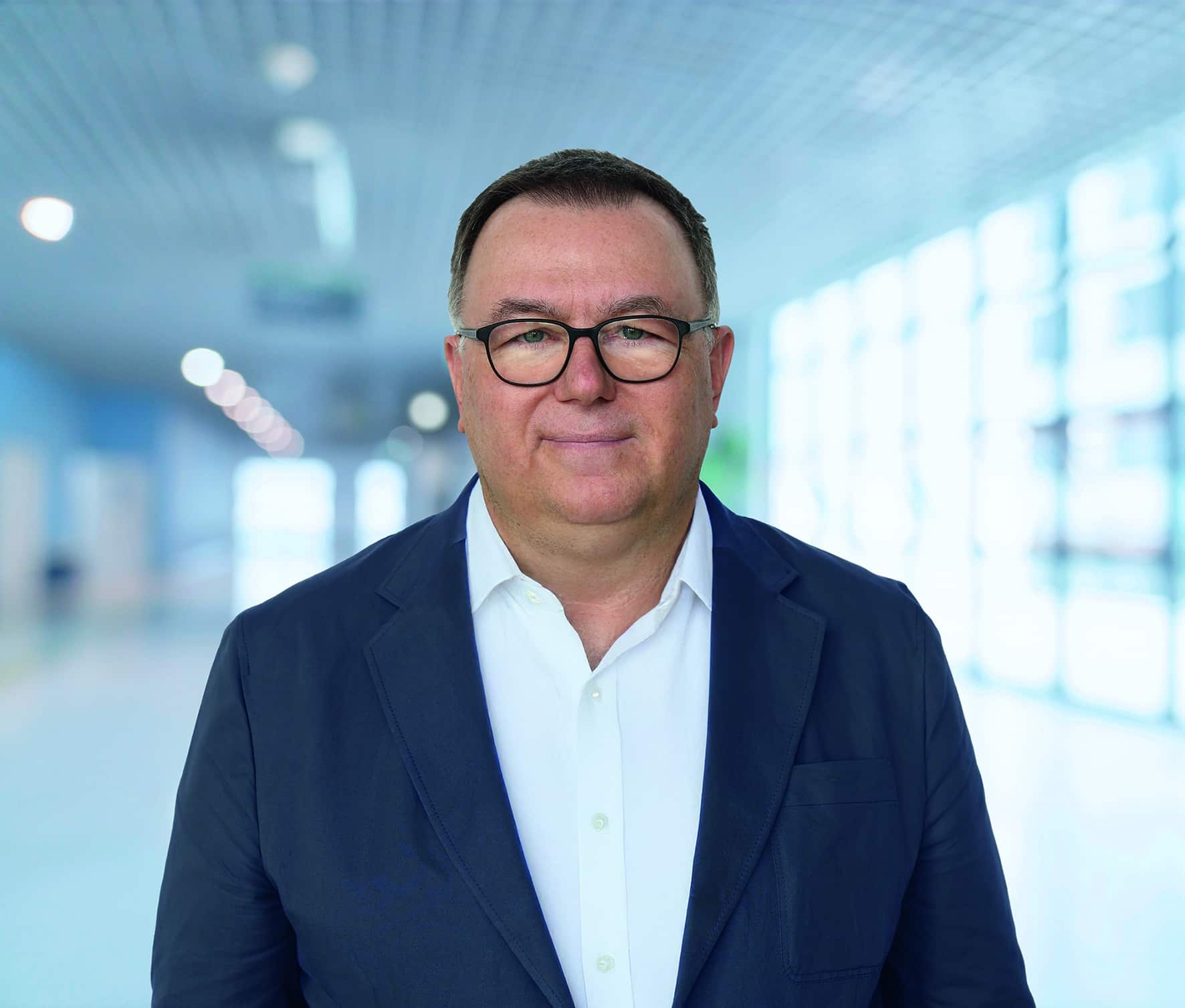
The growing sophistication of cybercrime is exposing significant weaknesses in corporate security strategies and the protection of critical infrastructure. Ahead of International Computer Security Day on 30 November, German security services and technology provider KÖTTER Security is calling for a more comprehensive approach to organisational resilience, warning that the traditional separation of physical security and cybersecurity is increasingly inadequate. The company argues that conventional IT protection alone can no longer address the complexity of emerging threats. Instead, businesses and critical infrastructure operators must develop integrated security strategies that combine digital defence, physical protection and organisational preparedness. “Given the rapid increase in cybercrime, which has become the number one business risk, this approach is no longer sufficient,” says Dirk H. Bürhaus, Executive Director of the KÖTTER Security Group and Managing Director of KÖTTER Cyber Security. “What is needed is a 360-degree approach that closely integrates digital, physical and organisational security.”
Artificial intelligence accelerates the threat landscape
The warning comes against the backdrop of an increasingly complex security environment. Artificial intelligence is transforming the capabilities of cybercriminals, enabling them to automate and scale malicious activities with comparatively little additional effort. Organisations are consequently facing a threat landscape characterised by greater speed, complexity and potential disruption. At the same time, criminals are increasingly exploiting the interdependencies between physical and digital infrastructure. Cyberattacks may be preceded by physical security breaches or interference with technical equipment, while social engineering techniques exploit employees’ trust to gain access to sensitive information or restricted areas. “The central question is no longer whether an organisation will become the target of an attack, but when it will happen, when it will be detected and how well the organisation is prepared,” Bürhaus explains. These developments challenge established security structures in which cybersecurity teams, physical security departments and facility management operate largely independently. As the boundaries between their respective responsibilities become increasingly blurred, organisational silos can undermine the effectiveness of otherwise sophisticated protection measures.
Cyberattacks threaten the continuity of essential services
The consequences of cybercrime extend well beyond financial losses and compromised data. Recent incidents have demonstrated how digital attacks can disrupt essential services, undermine public confidence and threaten the continuity of business operations. Companies have faced insolvency following cyberattacks, hospitals have been forced to postpone surgical procedures, and public authorities have experienced severe operational restrictions lasting several weeks. The retail sector has also become increasingly exposed to such threats. According to KÖTTER Security, hundreds of supermarkets across Europe, including Germany, were recently affected by a series of cyberattacks targeting internet-connected refrigeration systems. Such incidents illustrate the risks associated with the growing digitalisation of operational technology, building automation and technical infrastructure. Refrigeration systems, energy management platforms and other connected equipment are essential to business continuity, yet their security cannot be addressed through conventional IT protection alone. In food retail, compromised refrigeration can result in substantial product losses, food safety concerns and interruptions to supply chains. Similar dependencies exist across healthcare, logistics, manufacturing and energy infrastructure. “Every company and critical infrastructure operator must recognise that IT security can no longer remain an isolated silo. It must be understood as part of a comprehensive resilience strategy,” Bürhaus emphasises.
Building 360-degree resilience: From cyber defence to business continuity
KÖTTER Security advocates an integrated security model that brings together preventive measures, continuous monitoring, physical intervention and business continuity management. The objective is not merely to prevent incidents but also to minimise their consequences and maintain operational capabilities during a crisis. The company’s approach encompasses five interconnected areas.
Risk assessments and penetration testing
Systematic risk assessments provide the foundation for identifying vulnerabilities across both digital and physical infrastructure. Penetration testing, involving controlled and authorised simulations of attacks, enables organisations to evaluate the effectiveness of existing security measures and identify weaknesses requiring remediation. Rather than examining individual systems in isolation, an integrated assessment considers the interactions between information technology, operational technology, physical access and organisational processes. This broader perspective is particularly relevant for critical infrastructure operators, where failures in one area can have far-reaching consequences for interconnected systems and essential services.
Active cyber defence and continuous monitoring
Continuous monitoring through a Security Operations Centre (SOC) enables organisations to identify suspicious activities across networks, endpoints and cloud environments. KÖTTER Cyber Security provides round-the-clock monitoring and can initiate immediate digital countermeasures when threats are detected. Depending on the nature of an incident, these may include isolating compromised systems to contain an attack and prevent further disruption. However, effective incident response increasingly requires coordination beyond the digital environment. Where cyber incidents have a physical dimension, security personnel and technical specialists may also need to become involved. The integration of cybersecurity monitoring with established physical security and intervention structures can therefore contribute to a more coordinated response.
Integrating physical security and intelligent building technology
A central component of KÖTTER’s approach is the integration of electronic security systems with intelligent building and operational technology. KÖTTER Cyber Security can combine digital monitoring through its SOC with physical security services, including the deployment of on-site security personnel where necessary to protect sensitive technical infrastructure during combined digital and physical incidents. Meanwhile, KÖTTER Sicherheitssysteme, the group’s security systems division, integrates intrusion detection, hazard detection and building management technology into centralised security management platforms. These platforms allow security-related alarms and technical notifications from building equipment to be monitored and evaluated within a common operational environment. The potential benefits extend beyond conventional security applications. In supermarkets, for example, integrated monitoring can help identify abnormal operating conditions within refrigeration systems at an early stage. If a critical temperature increase is detected, an alarm can be transmitted to KÖTTER’s monitoring and alarm receiving centre, enabling appropriate response measures to be initiated. This approach illustrates how the convergence of security technology and building automation can contribute directly to operational resilience, asset protection and supply continuity.
Security awareness: Employees as part of the protection strategy
Technology alone cannot eliminate organisational vulnerabilities. Employees remain an essential component of effective security strategies, particularly as criminals increasingly exploit human behaviour and established relationships of trust. Security awareness programmes must therefore extend beyond conventional cybersecurity training. Alongside phishing, fraudulent communications and other digital threats, employees should be trained to recognise physical security risks, suspicious behaviour and unauthorised access attempts. A comprehensive awareness programme can help establish a security culture in which employees understand the relationship between their everyday decisions and the organisation’s overall resilience.
Business continuity management: Preparing for the inevitable
No security strategy can guarantee complete protection against every conceivable threat. Organisations must therefore prepare for circumstances in which preventive measures fail. Business Continuity Management (BCM) provides the organisational framework for maintaining essential functions during disruptions and restoring normal operations as quickly as possible. This involves identifying critical processes, evaluating operational dependencies, establishing emergency procedures and defining responsibilities before an incident occurs. For critical infrastructure operators in particular, the ability to maintain essential services under adverse conditions is a fundamental component of resilience. Effective business continuity planning consequently requires close cooperation between cybersecurity teams, physical security departments, facility managers and executive leadership.
From isolated protection to organisational resilience
Although KÖTTER Security’s appeal focuses primarily on Germany, the underlying challenges are relevant to businesses and infrastructure operators throughout Europe, the Middle East and Africa. The increasing convergence of information technology, operational technology and physical infrastructure is changing the nature of security risks across industries. Organisations operating internationally must also manage complex supply chains, technological dependencies and differing regulatory environments. For the security industry, these developments reinforce the importance of integrated solutions that combine electronic security systems, cybersecurity expertise, physical intervention capabilities and organisational preparedness. The effectiveness of such solutions should ultimately be measured not only by their ability to detect and prevent threats but also by their contribution to operational continuity and recovery.
International Computer Security Day: A reminder of evolving risks
Established in 1988, International Computer Security Day is observed annually on 30 November. Its origins lie in the emergence and spread of early computer viruses, which highlighted the need for greater awareness of digital security risks. Nearly four decades later, cybersecurity has evolved from a predominantly technical concern into a strategic challenge with significant economic and societal implications. According to figures cited by KÖTTER Security, cybercrime now causes estimated annual economic losses exceeding EUR 200 billion in Germany alone. The scale of these losses underlines the need to reconsider conventional security architectures. As digital threats increasingly produce physical consequences, effective protection requires an approach that extends beyond IT departments and encompasses the organisation as a whole. For businesses and critical infrastructure operators, the challenge is no longer simply to secure individual systems. It is to ensure that interconnected technologies, people and processes remain capable of delivering essential functions, even when confronted with serious disruption.
Source: KÖTTER Security, November 2026.