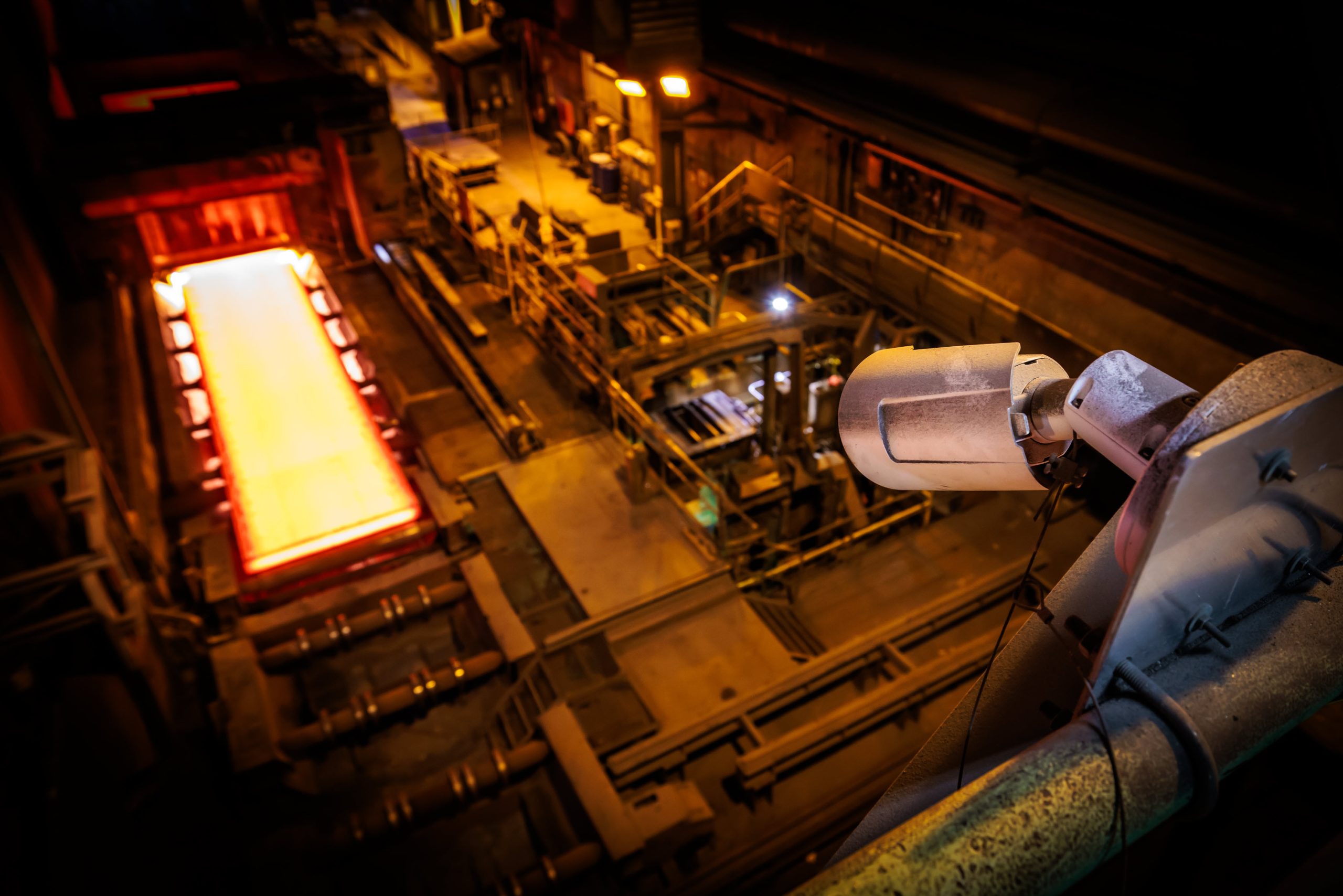
>> Axis Communications and ArcelorMittal Belgium
The market environment for the European steel industry is challenging. Declining production volumes, changing demand and high energy prices are increasing the pressure on plants to operate their existing facilities as efficiently and stably as possible. Digital technologies such as AI-based network cameras are becoming increasingly important and are dynamically changing competitive positions – especially where they help companies avoid production interruptions and secure safety-critical processes more efficiently.
A look at ArcelorMittal’s steelworks in Belgium shows how this can be achieved in practice. With around 222,000 employees worldwide and 400 locations in Europe alone, the ArcelorMittal Group is one of the world’s leading steel and mining companies, supplying customers in more than 60 countries. In Belgium, the company operates seven different production areas – from steelworks to hot and cold rolling mills – where it relies on network cameras from Axis Communications in combination with specially developed AI applications. The systems monitor production processes in real time, ensure quality and increase safety in high-risk areas. Currently, more than 2,700 network cameras from Axis Communications are in use there, with the aim of reducing downtime, standardising processes and relieving the burden on employees.
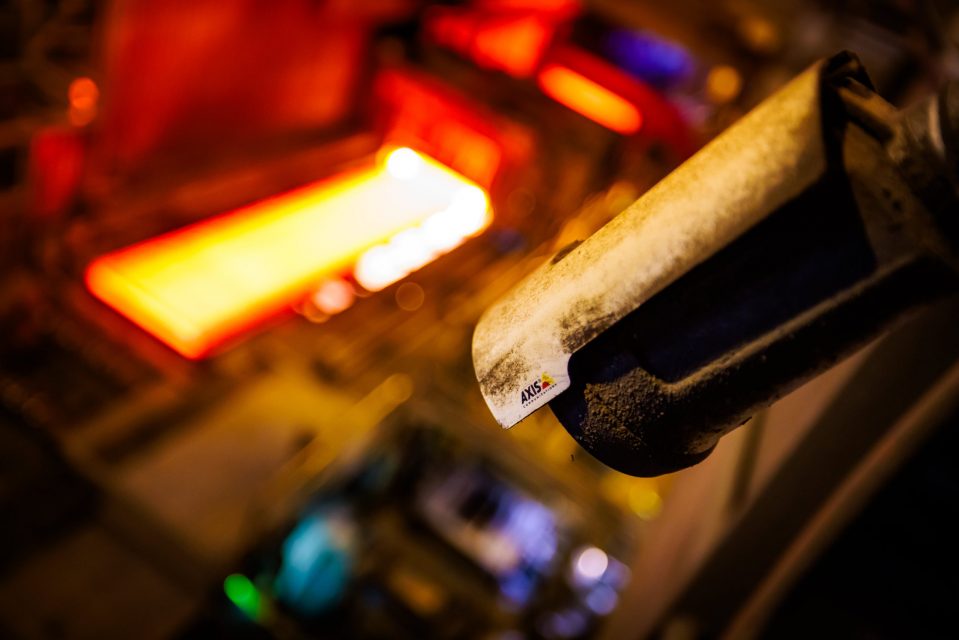
ArcelorMittal relies on network cameras from Axis Communications in combination with specially developed AI applications. (Copyright: Axis Communications)
Previously, employees on production lines often had to monitor ten to 20 live feeds simultaneously to keep track of process flows, material flows and quality parameters. In certain situations, it was also necessary for employees to leave the monitors and check the relevant plant area directly on site, which regularly meant both interruptions in the production process and additional work for the employees.
AI-powered video analytics for greater efficiency
To increase operational efficiency, ArcelorMittal Belgium developed a series of specialised AI applications that run directly on Axis network cameras. The cameras deliver stable, high-resolution image quality even under extreme conditions, such as the often challenging lighting and temperature conditions on steel production lines. The open VAPIX interfaces of the Axis platform also enable flexible, real-time AI-powered video analytics to be performed on different camera models and in multiple production areas. New analytics functions can thus be added or adapted without additional infrastructure, significantly increasing the scalability of the solution.
The modular camera systems detect deviations in the production process in real time and automatically inform the operators – for example, if an object has not been correctly aligned before transport. This reduces the susceptibility to errors in critical process steps and increases the overall stability of the plant.
Safety in high-risk processes
One area that is particularly critical in terms of safety is the transport of molten steel, which is moved by crane in large ladles with a capacity of up to 300 tonnes. Before such a ladle can be lifted, an AI-supported application automatically checks whether the crane hooks are correctly positioned and fully locked.
If the system detects a deviation, the lifting process is immediately blocked and an alarm is triggered. The application is integrated directly into the crane’s control system and only releases the process once the ladle has been clearly confirmed as securely fastened – either by the AI application or by a manual check based on the dual control principle. This prevents operating errors and significantly increases process reliability.
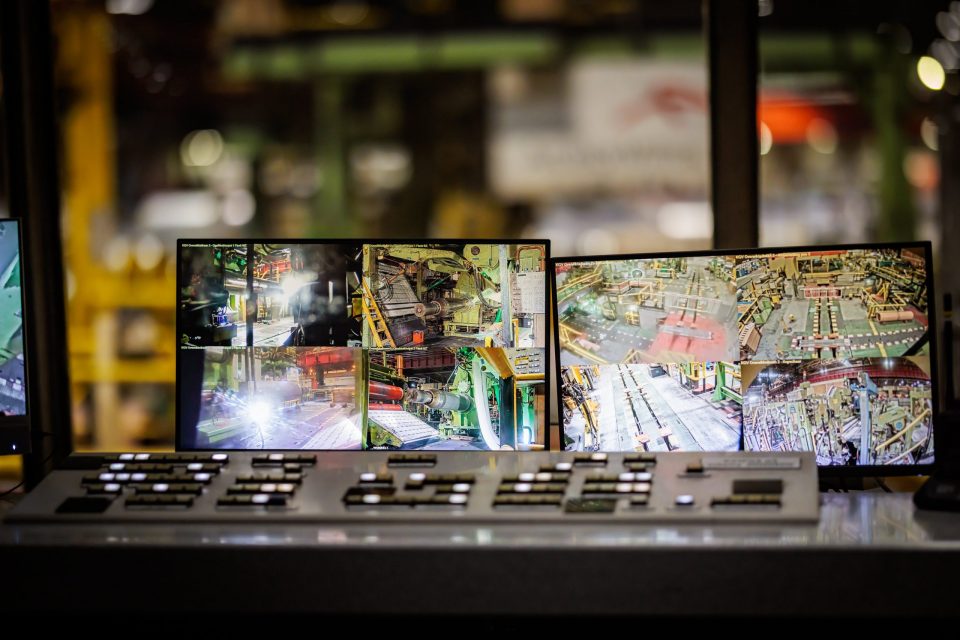
The modular camera systems from Axis Communications detect deviations in the production process in real time and automatically inform the operators. (Copyright: Axis Communications)
Automatic quality control and hazard prevention
AI-supported Axis cameras also play a central role in quality assurance, making inspection processes more efficient and less prone to errors. Before shipping, they automatically check each batch of steel for correct labelling and weld quality – for example, whether cracks, contamination or porosity have occurred during production. At the same time, this ensures that the material quality corresponds to the respective customer order.
In addition, ArcelorMittal uses AI-supported object recognition in safety-relevant areas to reliably detect unauthorised entry into danger zones. As soon as a person enters a restricted area, the systems automatically trigger acoustic and visual warning signals. Privacy protection functions such as dynamic masking of persons ensure compliance with legal data protection requirements.
The example of ArcelorMittal Belgium impressively demonstrates how steel production can be made more efficient, reliable and secure through the targeted use of network cameras and AI-supported video analytics. Axis’ open platform makes it possible to flexibly transfer the developed applications to other production areas or locations in the future – without extensive additional infrastructure.