
Wind turbines must generate electricity as efficiently as possible while also meeting increasingly demanding environmental and species-protection requirements. Fleximaus has developed the FlexiBird solution together with Axis Communications to address this challenge. By combining panoramic network cameras with AI-based image analysis, the system can detect agricultural activity around wind turbines and trigger the shutdown processes required to reduce the risk of bird collisions.
Wind farms are often located on or close to agricultural land. Activities such as mowing, harvesting or ploughing can disturb or attract birds and temporarily increase the risk of collisions with turbine blades. In such situations, operators may be required to shut down individual turbines for a defined period.
Fleximaus has developed FlexiBird to digitise and automate this process. The software can be integrated into both existing and new wind farms and brings monitoring, documentation and operational control together in one system. Different operating modes allow the solution to be adapted to site-specific requirements and permitting conditions.
AI Detects Agricultural Activity
A key function of FlexiBird is the automated detection of tractors and other relevant agricultural activity. Cameras monitor selected areas around the turbines, while AI-based software analyses the images in real time and identifies events that may require a temporary shutdown.
These include mowing, harvesting and ploughing. Once such an event is detected, a predefined group of responsible personnel can be notified automatically so that operators or technical managers can respond quickly.
The process can also be fully automated. Fleximaus uses its Greenbox communication system to connect the detection process with turbine control. This allows a wind turbine to be shut down automatically during and after a relevant agricultural event.
For operators, the benefit is not limited to faster reaction times. Automated detection and documentation can also reduce the need for manual inspections, telephone coordination and time-consuming checks, while providing evidence of when relevant events occurred and how the operator responded.
Two Panoramic Cameras per Turbine Tower
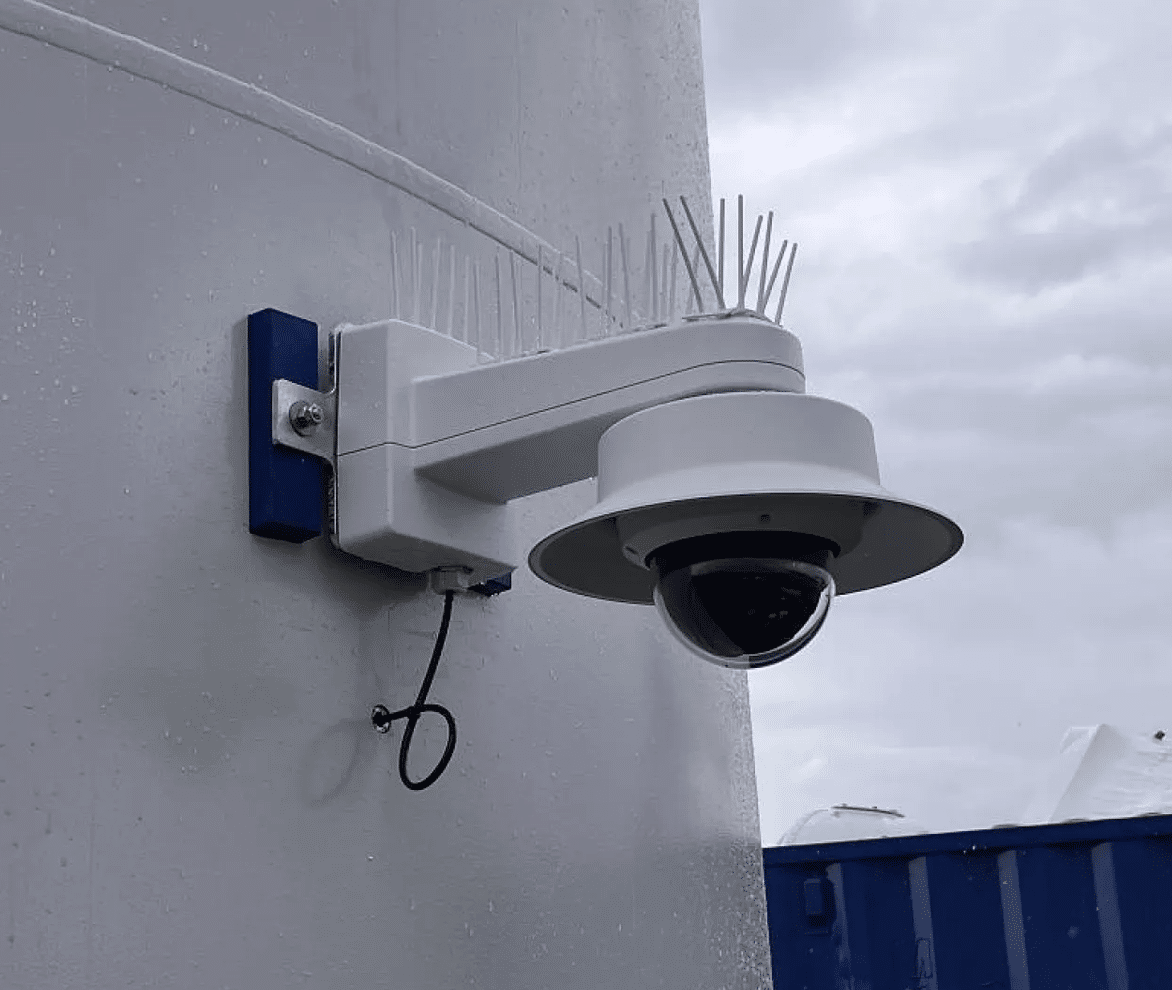
For visual monitoring, FlexiBird uses panoramic network cameras from Axis Communications. Two cameras are installed on each turbine tower at a height of around 80 to 100 metres, providing a 360-degree view of the surrounding area.
Installation can take place during construction of the turbine or later with the help of professional rope-access technicians. The cameras must be capable of operating reliably over long periods while exposed to wind, rain, snow and other challenging environmental conditions.
The cameras continuously capture activity on the surrounding agricultural land and transmit images to the AI-based software within the wind farm. The system then analyses the footage in real time for activities relevant to the permit conditions.
This changes the role of the camera significantly. It is no longer simply a visual monitoring device, but a sensor within an automated decision and control process. Only the combination of image capture, AI analysis, notification and turbine control makes event-based shutdown possible.
Linking Environmental Data with Operational Decisions
FlexiBird also records environmental parameters such as wind speed, outside temperature, precipitation and cloud cover. These values can be linked to bird-protection shutdowns, giving operators a broader picture of the conditions surrounding each event.
The approach illustrates how video and AI technologies are increasingly moving beyond traditional security applications. In this case, the cameras are not primarily used for perimeter protection or incident detection. Instead, they form the visual sensing layer of an automated environmental and operational management system.
For wind farm operators, the objective is to reconcile two requirements that can otherwise conflict: turbines should remain productive for as long as possible, while legally required shutdowns must be implemented reliably when specific environmental conditions occur.
Automated, event-based detection can help operators define shutdown periods more precisely while supporting verifiable compliance with bird-protection obligations.
In Germany, temporary shutdowns linked to agricultural activity such as mowing, harvesting or ploughing have been recognised in the Federal Nature Conservation Act since 2023 as a measure for reducing bird-collision risks at wind turbines.
Solutions such as FlexiBird demonstrate how camera technology, artificial intelligence and automation can be integrated into wind-farm operations to combine environmental protection with operational efficiency.

