Critical Infrastructure Protection, Data Centres and Digitalisation Drive Market Expansion
Germany’s electronic security technology market continued its upward trajectory in 2025, demonstrating resilience despite persistent challenges in the construction sector and broader economic uncertainty. Industry revenue increased by 3.9% year-on-year to €5.74 billion, confirming the sector’s robust position within the building technologies market.
The latest market figures indicate that electronic security is increasingly benefiting from long-term structural drivers rather than short-term construction activity alone. Investments in critical infrastructure protection, digital infrastructure, regulatory compliance and data centres are creating sustained demand across multiple security disciplines.
Security Industry Shows Resilience
According to Dirk Dingfelder, Chairman of the ZVEI Security Association, demand for electronic security solutions in Germany remains consistently strong.
Following relatively modest growth in 2024, the industry regained momentum during 2025 despite continued macroeconomic headwinds.
Nevertheless, the sector remains closely linked to construction activity. Axel Schmidt, Chairman of the German Security Industry Association (BHE), points to weak building activity and ongoing geopolitical uncertainties as factors affecting investment decisions throughout the market. Germany’s widely discussed construction stimulus has yet to generate significant market momentum.
However, indicators suggest that the construction industry may have reached its low point. Recent data from the Federal Statistical Office show a noticeable increase in residential building permits, while Germany’s special infrastructure and climate neutrality investment fund could provide additional growth impulses if implemented alongside existing investment programmes.
Critical Infrastructure Legislation Strengthens Physical Security
Regulation is becoming an increasingly important market driver.
Germany’s planned KRITIS Umbrella Act, which will introduce mandatory minimum protection standards for critical infrastructure operators, is expected to significantly increase investment in physical security technologies.
As resilience becomes a strategic priority across sectors including energy, healthcare, water utilities, telecommunications and data centres, technologies such as access control, video surveillance, fire detection and integrated security management are evolving from optional building systems into essential infrastructure components.
Data Centres Become a Key Growth Engine
The rapid expansion of data centres represents one of the strongest demand drivers for the electronic security industry.
Growing investments in cloud computing, artificial intelligence and digital infrastructure are increasing requirements for highly integrated security concepts that combine physical protection with operational resilience.
According to ZVEI, modern data centres require far more than traditional access control. Comprehensive security architectures integrate perimeter protection, intelligent video surveillance, access management and advanced fire detection systems capable of identifying critical heat sources at the earliest possible stage.
This convergence of multiple technologies further reinforces the strategic role of electronic security within digital infrastructure.
New European Regulations Transform Product Development
Beyond market growth, manufacturers are facing significant regulatory changes.
The revised European Construction Products Regulation (CPR) is entering its implementation phase and introduces new requirements concerning standardisation, sustainability and digital product information.
Particular attention is being paid to the forthcoming Digital Product Passport, which will fundamentally influence the development and lifecycle management of security products.
Manufacturers are therefore shifting from product-centric development towards lifecycle-oriented solutions that address sustainability, documentation, maintenance and long-term regulatory compliance.
Access Control and Video Security Outperform the Market
Growth varied considerably across the individual technology segments.
Fire detection systems remained by far the largest market segment, generating €2.7 billion in revenue. Sales increased by 3.9%, matching overall market growth, although the segment continues to depend heavily on new construction projects.
Voice alarm systems recorded revenue growth of 3.8%, reaching €143 million.
The strongest-performing segment was access control, where revenue increased by 6.1% to €541 million. Continued building digitalisation and increasing demand for secure identity and access management continue to drive above-average market expansion.
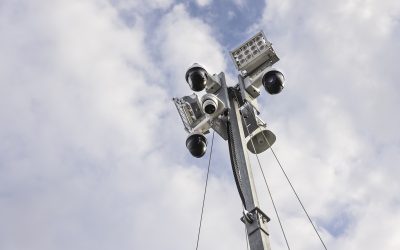
Video security technology also achieved 6.1% growth, reaching €870 million. The segment benefits from increasing integration with intelligent security platforms, AI-supported video analytics, access control systems and building management solutions. Modern video systems have evolved far beyond conventional surveillance and are becoming central components of integrated security architectures.
Intrusion Detection Records Moderate Growth
The intrusion and hold-up alarm segment experienced comparatively modest development. Revenue increased to €942 million, representing 2.4% growth, which remained below the overall market average.
Smoke and heat exhaust ventilation systems, including natural ventilation solutions, increased by 2.8% to €182 million.
Meanwhile, the combined market for other security technologies—including nurse call systems, emergency exit systems, personal emergency response solutions and additional security components—remained stable at €360 million.
Digitalisation Redefines the Security Industry
The latest market data illustrate a structural transformation within Germany’s electronic security industry.
While traditional building security continues to depend on construction activity, digital security technologies are increasingly driven by long-term investment in digital infrastructure, critical infrastructure protection and resilient facilities.
The expansion of data centres, rising cyber and physical security requirements, new legislation such as the KRITIS Act and the growing convergence of building technologies are accelerating the shift from standalone security products towards integrated security and infrastructure platforms.
Provided that Germany’s construction market gradually recovers, the electronic security sector appears well positioned for sustained growth. Increasing investments in digitalisation, resilient infrastructure and critical facility protection are expected to remain the industry’s primary growth drivers in the years ahead.